
Field trip planning
High School Field Trip Ideas That Make Learning Real.
Explore high school field trip ideas that connect coursework to careers, culture, civic life, science, and the wider Phoenix community.

The best high school field trip ideas give students a reason to look beyond the classroom. A well-chosen visit can put a career, a civic question, a scientific process, a work of art, or a community problem in front of them while there is still time to ask thoughtful questions about it.
High school schedules are tight, so the trip needs to earn its place. Instead of beginning with a destination, begin with the experience students need. Do they need to see how professionals use a skill? Compare a primary source with a textbook? Test a question in the field? Meet people whose work connects to a unit? Once that purpose is clear, the right destination becomes much easier to choose and the travel plan has a clear job to support.
1. Tour a college, technical program, or training centre
A campus visit can make post-graduation options more concrete, especially when students can see several paths rather than a single lecture hall. Community colleges, universities, trade schools, and career-training programmes can introduce students to labs, studios, workshops, student services, and the people who use them. A nursing simulation space, manufacturing lab, culinary kitchen, design studio, or aviation programme can help a student picture a future that had previously felt abstract.
Ask the host whether students can meet current learners, an admissions guide, or someone working in the field. A short conversation about programme requirements, day-to-day work, and first steps is often more useful than a broad promotional tour. Before boarding, have students prepare one question about a pathway they are considering and one question about a skill they want to build this year.
2. Visit a workplace where students can follow a real process
A workplace visit becomes valuable when students can trace how an idea moves from problem to finished result. A hospital department, engineering office, media company, construction site, restaurant, laboratory, public utility, manufacturer, or local business may show how people communicate, use tools, manage quality, solve safety issues, and work as a team. The setting does not need to be flashy. It needs to reveal work that students can connect to a course or future role.
Give the visit a frame: What is the organisation trying to accomplish? What knowledge or training does the team use? What decisions do people make during a normal day? Ask the host what can be shown safely and whether the group needs protective gear, smaller rotations, or a quiet observation space. That planning protects the host, the students, and the learning time.
3. Make civic life visible at a court, council meeting, or public agency
Civics becomes more meaningful when students can see how a public decision is debated, made, or carried out. A city council meeting, courthouse, state agency, election office, planning department, public library system, or water-management site can connect government coursework to the systems that affect daily life. Students can see that public work involves evidence, rules, competing priorities, budgets, and people who have to explain their decisions.
Prepare students for the setting and its rules. A court, meeting, or operating agency may have security procedures, limits on movement, and expectations for respectful observation. Give the class a simple note-taking focus, such as identifying the issue being addressed, the evidence people use, or the tradeoff the group is trying to resolve. A short debrief afterwards helps students separate what they observed from their initial assumptions.
4. Use museums, archives, and cultural institutions as primary-source labs
High school students can move beyond a guided tour when a museum or cultural institution gives them something to analyse. An art museum, historical site, archive, memorial, heritage centre, or performance venue can provide objects, documents, images, stories, and interpretations that reward close attention. The New Jersey State Museum’s high school field trip guide, for example, combines exhibits with workshops, expert conversations, and teacher resources. That structure is a useful reminder that students learn more when they arrive with a question and leave with material to work with.
Choose one or two themes rather than trying to cover an entire institution. An English class might compare how two works create a point of view. A history class might ask whose perspective is present or missing. An art class might study material, scale, or display choices. The follow-up can be a source analysis, short exhibition label, debate, creative response, or evidence-based paragraph.
5. Take science outside the classroom
Fieldwork gives students a chance to collect observations in a setting that does not behave like a worksheet. A botanical garden, watershed, desert preserve, astronomy programme, research centre, zoo, science museum, or environmental organisation can support questions about ecosystems, climate, geology, conservation, energy, and data. The destination should connect to a specific investigation, such as how organisms adapt to heat, how a local water system is managed, or what evidence supports a conservation decision.
High school groups can handle a more deliberate research task. Ask students to record a pattern, compare two sites, interview a guide about methods, or bring back evidence for a claim. Confirm shade, walking distance, restroom access, weather exposure, accessibility, and lunch arrangements early. In the Phoenix area, heat planning deserves a place beside the lesson plan, not a note added after everything else is set.
6. Explore the arts as a working discipline
A theatre, concert hall, film screening, gallery, design studio, dance company, or community arts programme can show students how many disciplines sit behind a finished performance or work. Beyond performers and artists, students may encounter sound, lighting, stage management, costume, curation, fundraising, communications, fabrication, and education roles. That broader view makes an arts trip useful for students who enjoy creative work but have not yet seen the range of careers around it.
Ask whether a backstage conversation, rehearsal observation, artist talk, or short workshop is available. Then connect the visit to a real task: evaluate design choices, write a review, create a programme note, compare an adaptation with a text, or explain how a technical decision affects the audience experience. Students are more likely to remember a performance when they have a reason to notice the work behind it.
7. Plan a service or community-partnership experience
A service-focused trip can help students see the needs and strengths of their own community, but it should be planned as a partnership rather than a one-day rescue story. Food banks, habitat restoration projects, community gardens, senior centres, animal-welfare organisations, literacy programmes, and neighbourhood groups may welcome student support when the school understands the organisation’s priorities and prepares students for the work.
Set expectations before the day. Students should know who the organisation serves, what respectful participation looks like, which tasks are appropriate, and how the group will reflect on the experience. The most useful follow-up asks students to connect the day to a wider question about community needs, resources, systems, or careers. That turns service into learning with context.
8. Build a field trip around a challenge, competition, or professional event
Career fairs, mock-trial events, robotics competitions, science expos, college showcases, trade demonstrations, public lectures, and student performances can give a group a visible goal. These events can be especially useful when students need to practise professional communication, compare programmes, present work, or see peers use a skill at a high level. The trip should not be only about attending. Give students a role as observers, participants, interviewers, or evaluators.
For a larger group, plan where students meet, how adults check attendance, when meals happen, and how the return window will be communicated. Event schedules can shift, so a clear itinerary and one reliable contact plan matter. The site’s field trip itinerary template helps organisers keep those moving parts in one place.
9. Let students investigate a local question
Some of the strongest high school field trips begin with a local question that does not have one tidy answer. How is a fast-growing city managing water? What makes a neighbourhood walkable? How do public spaces tell a community’s history? What happens to material after it is recycled? A transit centre, watershed project, historic district, neighbourhood business corridor, university research site, or public art walk can give students evidence they can examine rather than a topic they only read about.
Build the day around a claim students will test. A geography class might map shade, access, or land use. An economics group might ask what choices a small business has to make. A journalism class could interview a guide or compare whose stories are represented in a public place. The point is not to turn every stop into an assignment. It is to give students a reason to notice, record, and discuss details that matter.
10. Create a thoughtful alternative when travel is not the right fit
A destination is not automatically a good trip because it is far away. If the timing, cost, accessibility, or adult coverage will make the day stressful, keep the learning goal and change the format. Invite a professional to campus, arrange a virtual conversation with a researcher, use a local place within walking distance, or divide one large experience into smaller school-day activities. Students still benefit when the experience gives them a real voice, primary material, or expert perspective.
This approach also makes planning more equitable. A smaller local visit may allow more students to participate, leave more room for classroom preparation and reflection, and avoid asking families to absorb unexpected costs. The best option is the one that gives students a meaningful experience while fitting the school’s actual resources and responsibilities.
Choose an idea that works for your actual school day
Before confirming a high school field trip, test the idea against five practical questions. Does the experience connect to a course, pathway, or student goal? Will students have a purposeful task at the destination? Can the school protect enough time for travel, transitions, meals, and the experience itself? Are adult coverage, accessibility, behaviour expectations, and emergency information clear? Can the group arrive and leave without creating a rushed or confusing day?
Use a simple planning sequence. First, write the learning purpose in one sentence. Next, ask the destination what it can realistically provide for the age group and group size. Then work through the approval, family, adult, timing, and travel details with the field trip planning checklist. The earlier those pieces connect, the easier it is to make good decisions when a date, student count, or venue detail changes.
Transportation also belongs in the early conversation. Federal guidance recognises field trips as school-related events, and the National Highway Traffic Safety Administration’s school bus regulations guidance specifically includes field trips among those events. Before departure, a practical student briefing should cover boarding expectations, the location of emergency exits, and the plan for staying with the group. The agency’s school bus safety guidance is a helpful starting point for that conversation.
How Phoenix Suburban Transportation helps high school groups get there
Phoenix Suburban Transportation helps school teams coordinate field-trip travel around the details that shape the day: pickup locations, group size, destination timing, loading routines, accessibility needs, trip contacts, and the return to campus. When the experience is set, share the trip details with Phoenix Suburban Transportation so the transportation plan supports the learning plan from the first departure to the final handoff.
Frequently asked questions
Strong high school field trips give students access to a real setting, professional perspective, primary source, or practical problem they cannot experience as fully at school. Career sites, colleges, courts, museums, science institutions, cultural organisations, community projects, and outdoor research locations can all work when the visit has a clear learning purpose.
Start with one question, skill, or unit connection, then give students a purposeful task before, during, and after the visit. A short interview prompt, observation sheet, design brief, source analysis, or reflection can turn a tour into evidence students can use back in class.
Begin as soon as the school has a likely date and learning goal. Popular venues, transportation, approval steps, family communication, adult coverage, accessibility needs, meals, and student schedules all take coordination. A written timeline makes it easier to confirm each decision before the day becomes urgent.
Share the date, pickup and return windows, group estimate, destination address, loading area, trip leader, itinerary, accessibility needs, and any schedule changes that could affect the route. Clear information gives the transportation team the context needed to plan a dependable trip.
Related posts
Planning a Field Trip: A School Timeline
A practical field trip planning timeline for schools, from the first learning goal and approval request to the final student count.
Read the guide →
Field Trip Planning Checklist for Schools
Use this school field trip planning checklist to confirm approvals, destination details, adult roles, transportation, and family communication before the day of the trip.
Read the guide →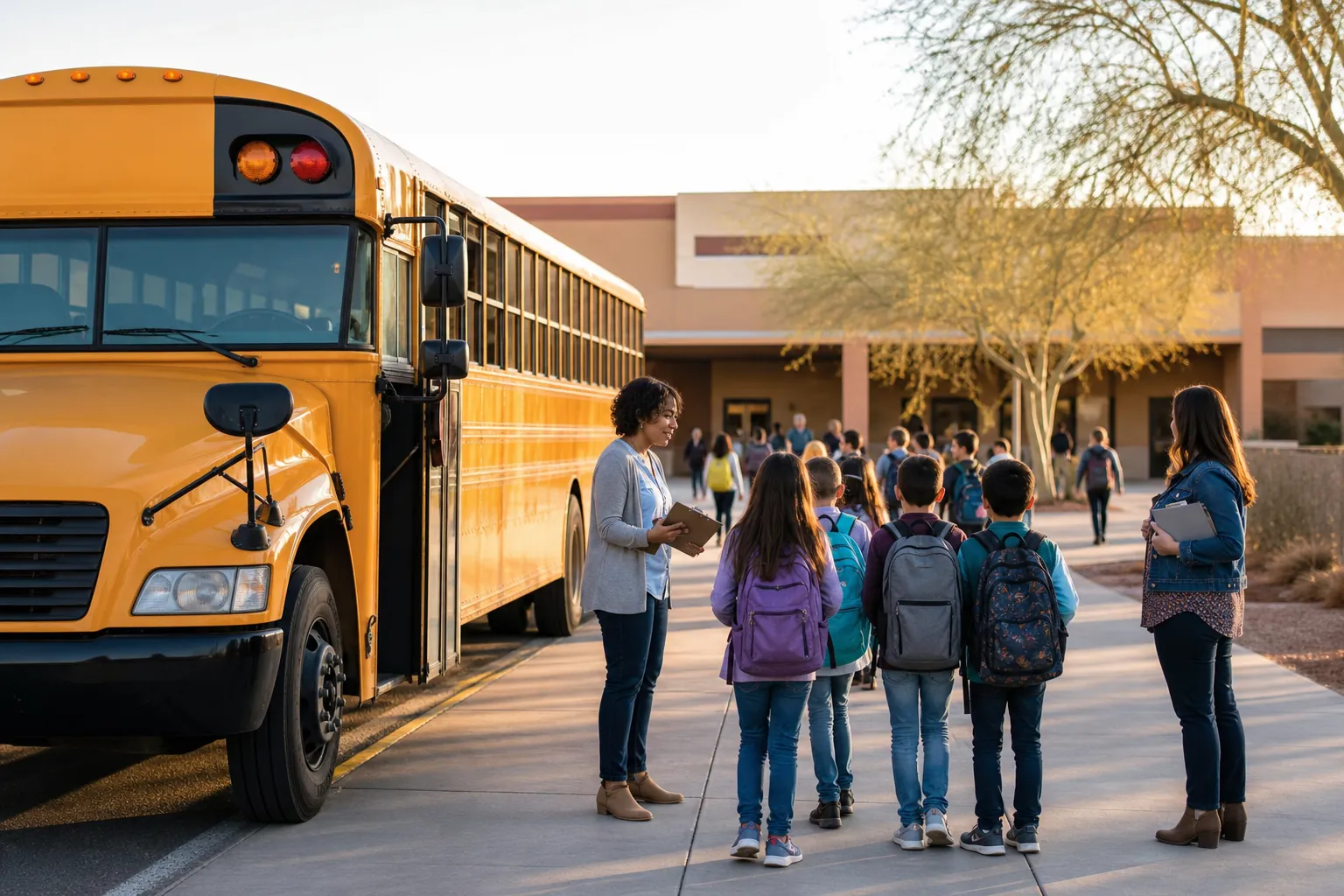
Field Trip Transportation: A School Planning Checklist
A practical checklist for schools coordinating safe, organized transportation for an educational outing.
Read the guide →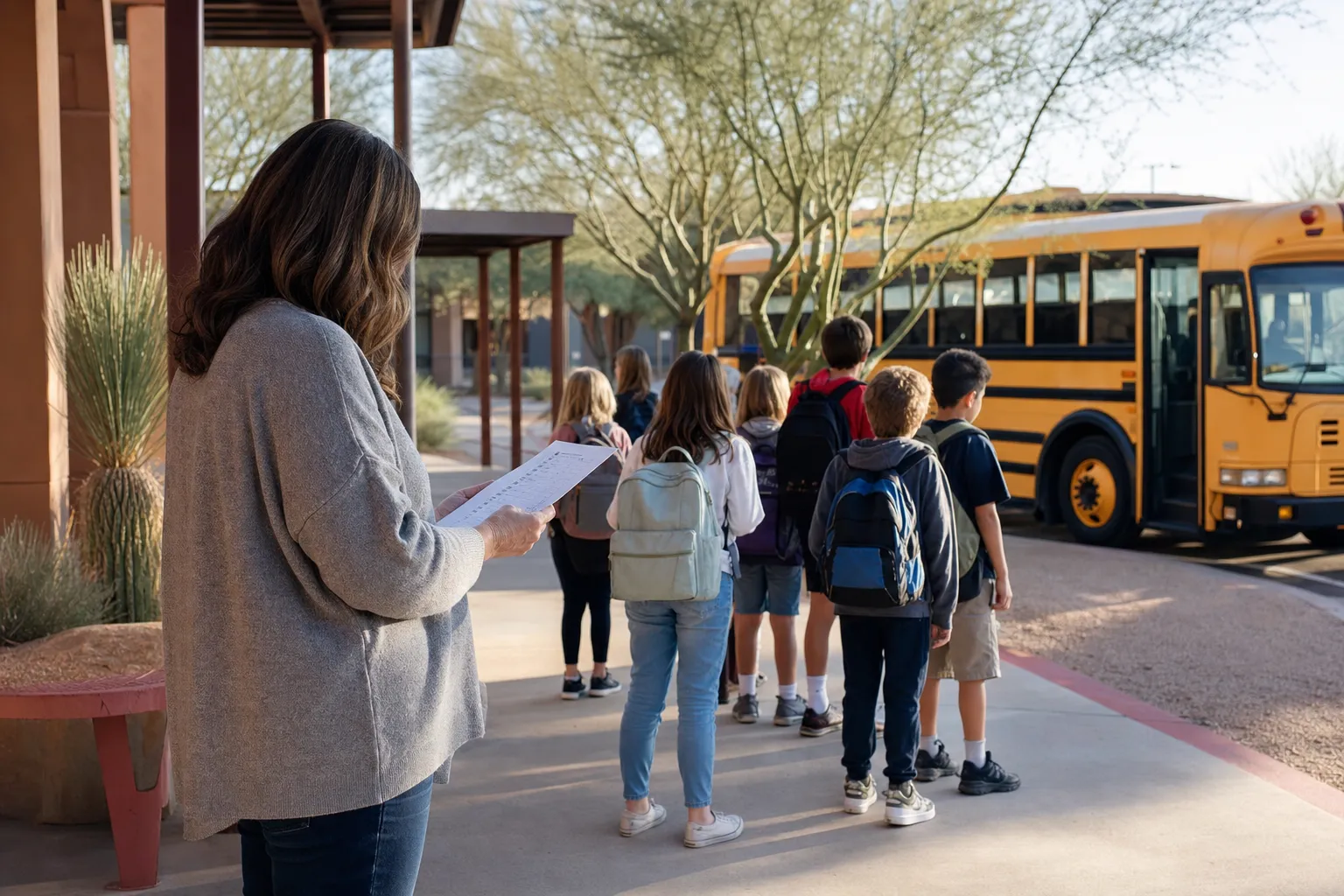
Field Trip Chaperone Checklist: 10 Essentials
Use this 10-point field trip chaperone checklist to prepare for student supervision, counts, communication, transitions, and the return trip.
Read the guide →