
Field trip planning
Field Trip Itinerary Template for Schools.
A practical field trip itinerary template that helps school staff organize timing, contacts, transportation, and the return plan.

A field trip itinerary is the working plan that keeps the day from turning into a chain of last-minute questions. It gives teachers, chaperones, school leaders, and transportation contacts the same view of where the group needs to be, who makes decisions, and what happens when timing shifts. This template shows the details worth organizing before students leave campus.
Start with one clear trip snapshot
Put the details every adult needs at the top of the itinerary: trip date, destination name and address, grade level, estimated student count, adult count, and the school lead. Add the destination's required arrival time rather than only its program start time. A museum, performance, campus tour, or outdoor learning site may have a group check-in window, security process, or bus entrance that adds time before the activity begins.
Give the itinerary a simple purpose statement, too. It can be as direct as "Grade 5 science museum visit" or "Varsity band performance travel." That small line helps adults understand why the schedule may include special equipment, meal timing, a split group, or an unusual return time. It also makes the document easier to identify when a school is coordinating several events in the same week.
Keep the snapshot factual. The itinerary is not the place for every family reminder or staff discussion. Its job is to help the adults running the day find the next important detail quickly. The larger field trip transportation checklist can help a school collect those core trip details before the itinerary is shared.
Build the schedule around real transitions
Students do not move from classroom to destination in one uninterrupted block. A dependable schedule accounts for the transitions that usually take longer than expected: gathering students, attendance, restroom breaks, loading bags, boarding, unloading, check-in, regrouping, and getting back on the vehicle. Give each major transition a time, location, and lead adult.
Work backward from the destination's arrival requirement. If the program starts at 10:00 a.m. but the venue wants school groups checked in by 9:30, the itinerary should show the vehicle arrival, unloading, and walk-in time before that window. The same approach matters for the return. A return pickup time should reflect the group's actual release process, not just the end time printed on a ticket or event calendar.
For schools in the Phoenix area, heat, long walks, and busy curbside access can add practical pressure to an otherwise simple schedule. The Centers for Disease Control and Prevention's heat safety guidance recommends planning ahead for hot conditions. That does not mean every itinerary needs a weather section. It means outdoor time, water access, and any temperature-related school instructions should be clear before the trip begins.
Use a contact plan people can actually follow
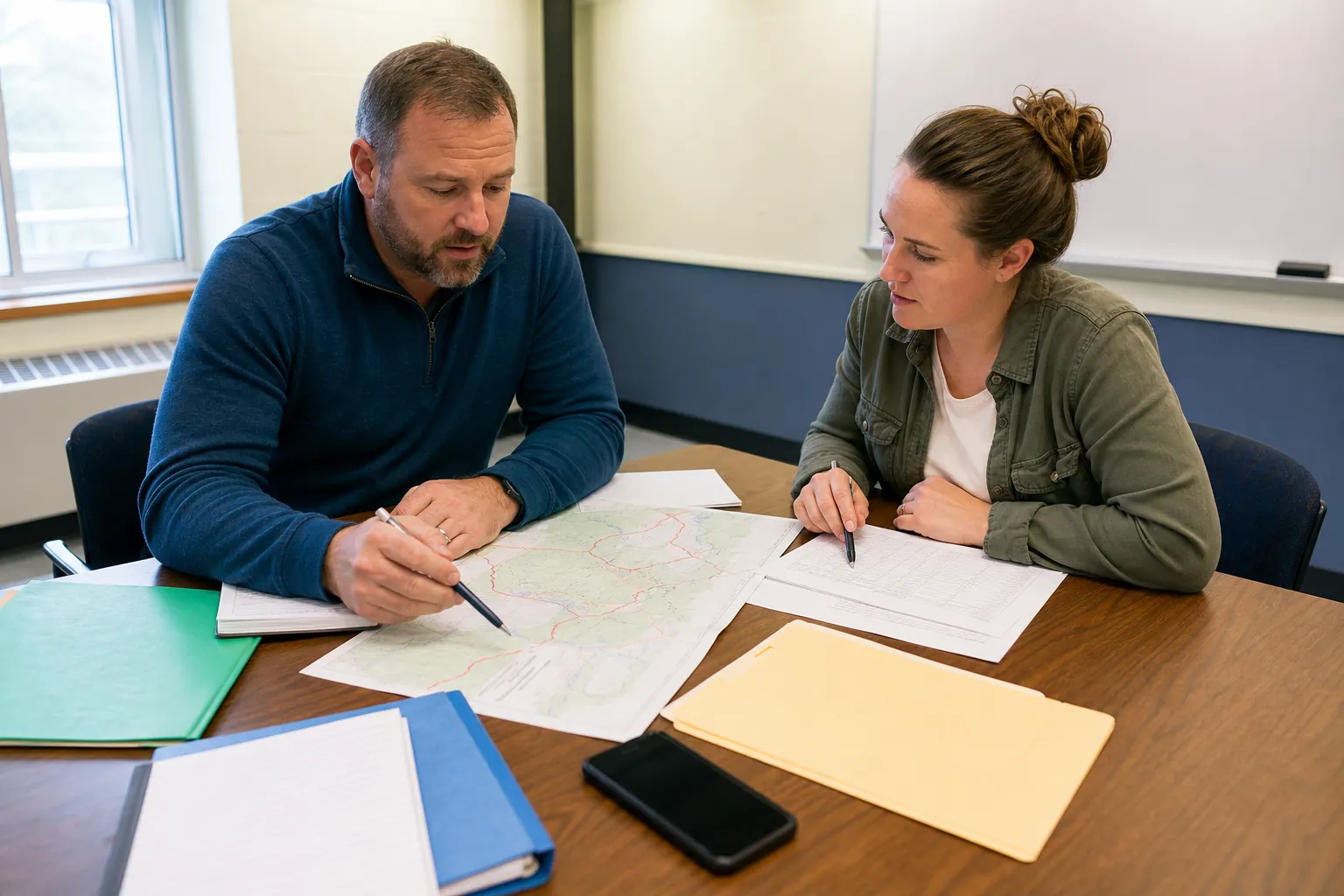
A field trip needs a lead school contact, a backup contact, and a transportation contact. Include each person's name, role, and phone number on the operational version of the itinerary. The school lead should be the person authorized to make schedule decisions. The backup should be ready to take over when the lead is supervising students, in a venue program, or dealing with a problem.
Be clear about what should be communicated and by whom. A changed passenger count, delayed departure, new loading location, accessibility concern, or late venue release should go through the designated school lead. That prevents several adults from sharing partial information or making conflicting requests. It also helps the transportation contact respond to one dependable source rather than trying to interpret a busy group text.
Families need a separate, simpler message. They should receive the school's approved departure and return window, destination basics, permission information, and packing expectations. The field trip permission slip guide shows how to give families useful trip information without sending them the internal operational plan.
Document pickup, loading, and destination access
Every itinerary should name the exact school pickup location, vehicle arrival time, boarding time, and the staff member responsible for the first student count. At the destination, include the preferred bus entrance, unloading point, parking or staging instructions, and the group meeting location. These details are easy to overlook until a vehicle reaches a crowded campus or a venue with a restricted driveway.
The National Highway Traffic Safety Administration's school bus safety guidance explains the safety systems that make school buses one of the safest ways for students to travel. The itinerary supports that safety by giving staff a clear process for boarding, seating, adult supervision, and departure, rather than asking the group to improvise at the curb.
Write down any special realities of the trip: instrument cases, sports equipment, student mobility needs, a limited loading zone, or a destination with a different return pickup point. A transportation partner needs the complete picture early. Schools can use the Phoenix field trip transportation page to see the transportation details worth sharing when planning an outing.
Make attendance and supervision visible
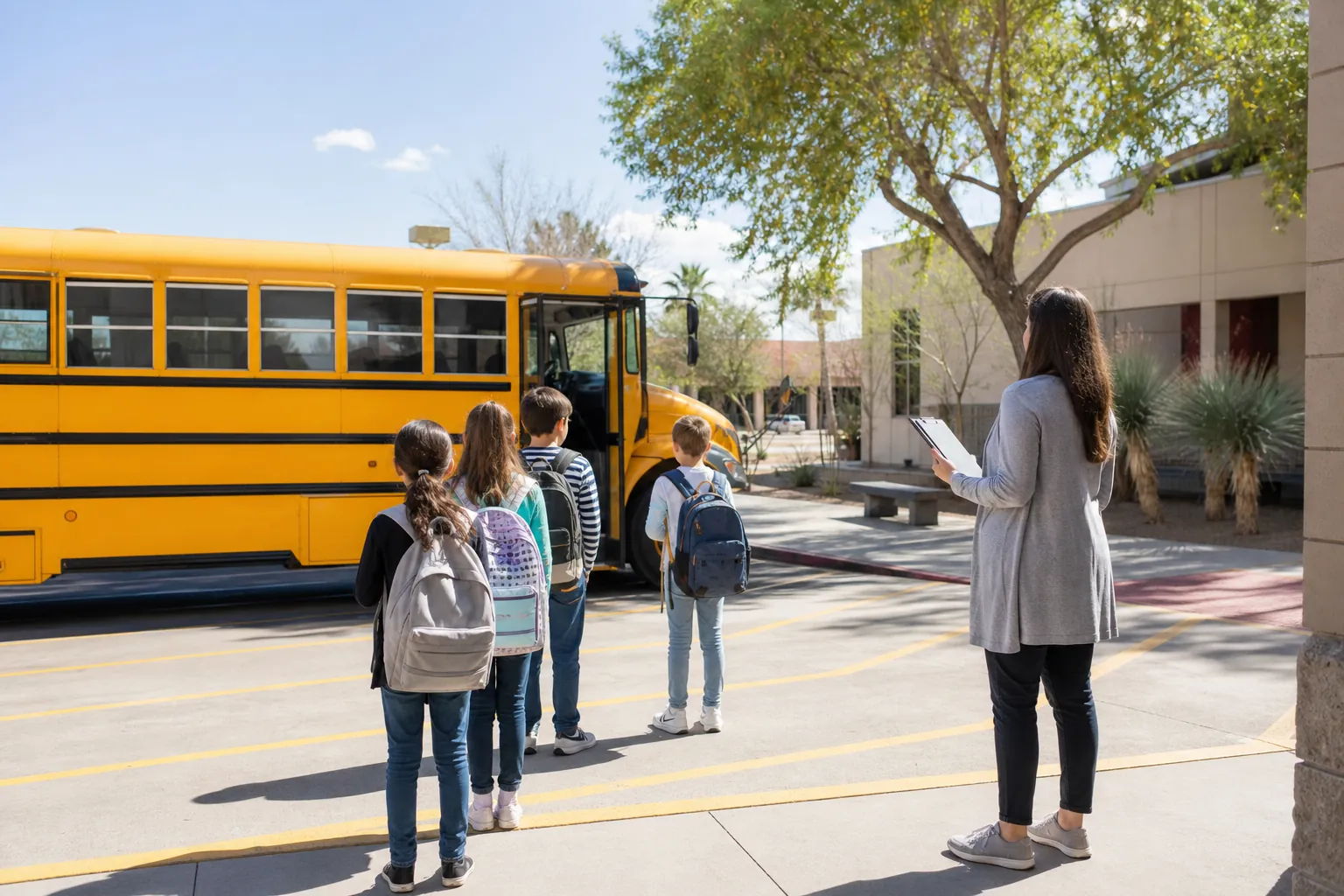
An itinerary should not only say how many people are expected. It should show when the school confirms the count. A reliable pattern is to count students before leaving campus, before leaving the destination, and after returning to school. Identify who owns each count and where the adults regroup before boarding. The routine should be short enough to repeat without debate.
Give chaperones their group assignments, meeting points, and the method for reporting a concern. They do not need every operational detail, but they should know who the school lead is, where their students should be at each transition, and what to do if someone is separated from the group. The field trip chaperone checklist gives staff a useful companion to the itinerary when adult responsibilities need to be confirmed.
Before departure, provide an age-appropriate safety briefing for students. NHTSA's school bus regulations and field-trip guidance recognizes school-related events as part of pupil transportation. Students should know where to wait, when to board, how to keep the aisle clear, who to ask for help, and how the group will exit at the destination.
Plan meals, materials, and the day's practical needs
Small logistics are often what slow down a field trip. Note whether lunch is provided, packed, purchased, or eaten at a designated time and place. Include water expectations, school-approved spending arrangements, materials students need for the activity, and any destination restrictions. The goal is not to make the itinerary longer. It is to prevent the important items from being discovered after the group has left school.
For younger students, staff may also need a simple note about bags, jackets, lunches, and what stays with the student during travel. The field trip packing checklist can help schools create a family-facing list that matches the actual itinerary instead of relying on a generic reminder.
Keep student health, medication, and accessibility details within the school's established process. The operational itinerary can identify the staff role responsible for support without exposing private information to every adult on the trip. When a student needs a specific accommodation, address it early with the appropriate school contact and transportation partner.
Use this field trip itinerary template
Copy these headings into the school's preferred planning document, then keep each item short and specific:
- Trip overview: date, purpose, grade level, destination, and school lead.
- Schedule: student gathering, boarding, departure, arrival, program, meals, return pickup, and school arrival.
- People: student count, adult count, lead contact, backup contact, and transportation contact.
- Transportation: pickup point, vehicle arrival, loading expectations, destination entrance, unloading point, and return pickup location.
- Supervision: chaperone assignments, attendance-count times, meeting points, and student briefing notes.
- Day-of details: meals, materials, weather considerations, equipment, and any school-managed support needs.
- Change plan: who can adjust timing and how the school will communicate a delay or location change.
Read the completed itinerary once from the perspective of a chaperone who is seeing it for the first time. Can they identify the next place, next time, and next person to contact? If not, simplify the line that is unclear. A usable plan is better than a detailed document that no one can scan during a busy transition.

Make the itinerary usable on the day of the trip
The best itinerary is not a document that gets filed after approval. It is a practical reference for the adults moving students through the day. Keep the current version easy to reach on a phone and bring a printed copy for the school lead and vehicle lead when that fits the school's process. A printed version is useful when staff are outside, a phone battery is low, or the lead adult needs to point to a time and place while keeping eyes on students.
Use the same order the day will follow. Start with school arrival and boarding, then move through travel, destination arrival, program timing, meals, regrouping, return boarding, and campus arrival. Adults should not need to jump between a schedule, a map, a text thread, and a permission packet to find the next action. One sequence helps the group stay coordinated even when someone has to step away to supervise students.
At each transition, the school lead can ask three quick questions: Are all students accounted for? Is the group where the itinerary says it should be? Does the transportation contact need an update? That short check prevents a delay from becoming a surprise. It also gives teachers and chaperones a clear way to raise a concern without taking over the communication plan.
When the day includes several stops or a tight return window, consider adding a short notes column for the lead adult. Use it only for changes that affect the next decision, such as a new pickup point, a venue running late, or a different count after a student leaves with a parent under the school's approved process. The school's transportation services and local coordination approach can help staff see how early, clear trip details support a more dependable day.
Confirm the final version before the trip
In the days before departure, confirm the passenger count, destination instructions, transportation timing, lead contact, weather plan, meal plan, and return procedure. The final review should also include the information that can change quickly, such as a new venue entrance, a late student addition, or a different school pickup point after an activity.
Share the final operational itinerary with the adults who need it, then keep a copy available on the day of the trip. A paper copy can still be useful when a phone battery runs low or a staff member needs to look at the plan while supervising students. The point is not the format. The point is that the group has one current version to follow.
Bring the transportation plan into focus early
Phoenix Suburban Transportation helps Phoenix-area schools coordinate field trips, educational outings, athletics, and custom transportation needs. Sharing the itinerary's date, group size, destination access, timing, and return plan early gives the transportation conversation a stronger start and helps school staff keep their attention on students.
Planning a school outing
Bring the trip details into one clear plan.
Phoenix Suburban Transportation helps schools coordinate field trips, educational outings, athletics, and custom transportation needs.
Frequently asked questions
A useful field trip itinerary includes the date, destination, pickup and return times, arrival requirements, transportation details, student and adult counts, lead contacts, meal plan, destination access instructions, and the plan for leaving the venue. Each adult should be able to see what happens next without searching through messages.
Share the full operational itinerary with the school lead, teachers, chaperones, and transportation contact. Families usually need a simpler trip notice with the approved departure and return window, destination details, permission information, and any student packing instructions.
Build the first version as soon as the date and destination are being considered, then confirm the final details before the trip. Passenger counts, venue instructions, transportation timing, and contact information should be checked again close to departure because those details can change.
It should be detailed enough to guide decisions, not so dense that people cannot use it quickly. Name the time, place, responsible contact, and next action for every major transition: leaving school, arriving, meals, regrouping, boarding, and returning to campus.
Related posts

Field Trip Transportation: A School Planning Checklist
A practical checklist for schools coordinating safe, organized transportation for an educational outing.
Read the checklist →
Field Trip Permission Slip: What to Include
A practical guide to the details families need before a school field trip, from itinerary basics to return plans.
Read the guide →
Field Trip Chaperone Checklist: 10 Essentials
A practical checklist for school chaperones who need to keep students accounted for, informed, and together throughout a field trip.
Read the checklist →