
Field trip planning
Field Trip Chaperone Checklist: 10 Essentials.
A practical checklist for school chaperones who need to keep students accounted for, informed, and together throughout a field trip.
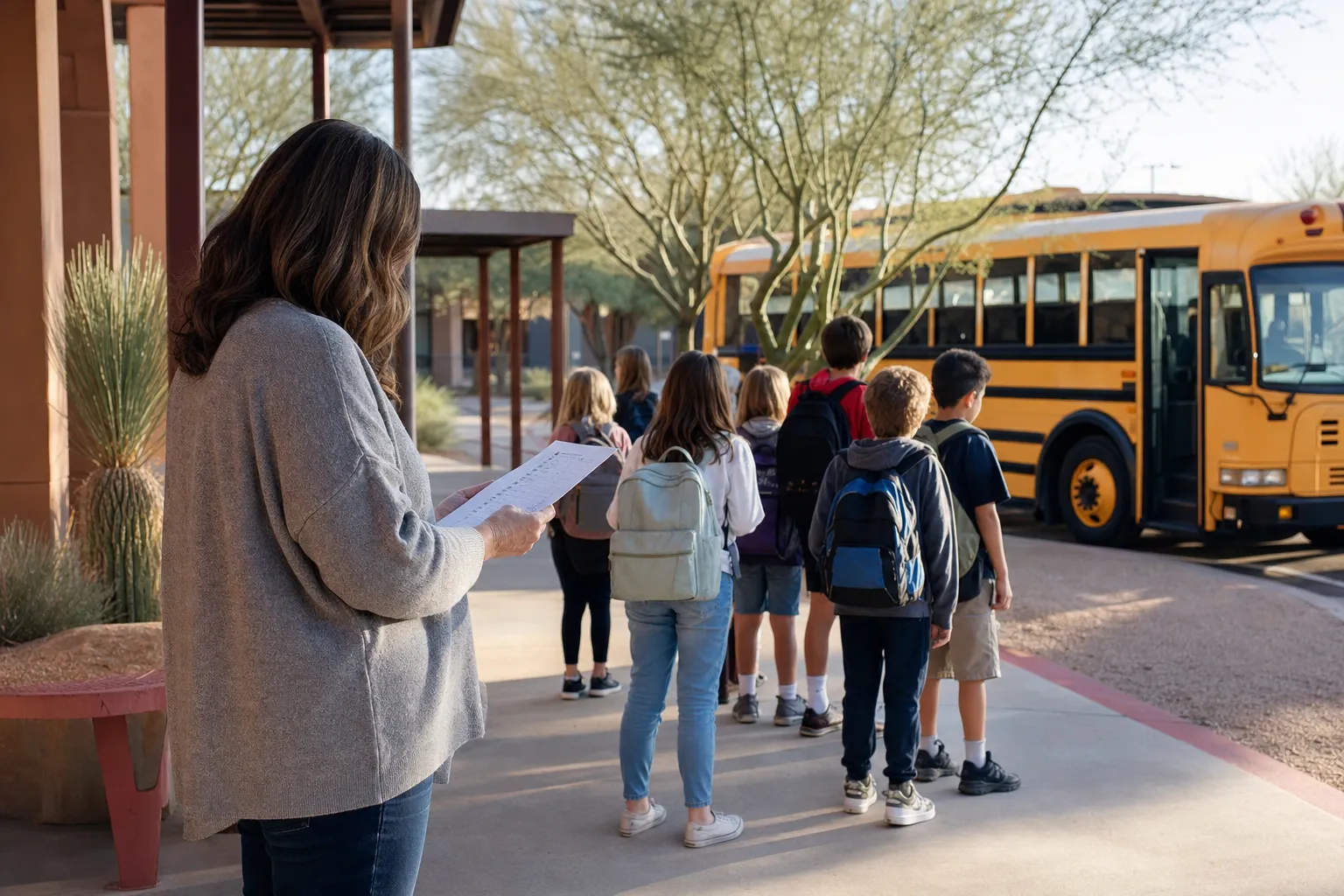
A field trip chaperone is not there to run the entire day alone. The job is to help students move through a school-approved plan with steady supervision, clear handoffs, and a calm response when details change. This checklist gives chaperones a practical way to prepare without stepping outside the roles and procedures their school has already set.
1. Know your role before students arrive
Before the trip, ask the lead teacher or administrator what you are responsible for. You may be assigned a small group, a vehicle, a meeting point, a student who needs extra support, or a specific transition such as lunch or the return walk to the bus. Knowing that assignment early is more useful than trying to absorb every detail of the day at the curb.
Get the essentials in one place: the destination, departure and return windows, the name and cell phone number of the designated school lead, the plan for attendance, and the meeting spot for your group. If the school uses a trip brief, read it before the morning of the outing. The companion field trip transportation checklist can help the school team organize the wider schedule, vehicle details, and day-of communication.
Chaperones should follow the school's own rules for student supervision, health information, privacy, medications, behavior, and emergency response. A checklist supports those policies. It does not replace them. If something about your assignment is unclear, ask before students arrive rather than making a decision in the middle of a crowded transition.
2. Learn the simple plan for the day
A chaperone does not need to memorize a long operations document, but should be able to describe the trip in a few sentences: where the group is going, what students are doing there, when the group needs to be at each major point, and how the group will return. That basic picture makes it easier to spot when a student has gone to the wrong meeting location or when a group is falling behind.
Pay close attention to transitions. The most confusing moments are usually not the activity itself. They are the moments before boarding, after arriving, moving through a large venue, regrouping for lunch, and returning to the bus. Ask the lead where students should wait during each transition and how chaperones will know when it is time to move.
Keep expectations straightforward for students. They should know who their adult is, how to get that adult's attention, what to do if they cannot find the group, and where they are expected to be at the next check-in. Short, repeatable instructions are more useful than a long speech students will not remember once the trip begins.

3. Start with a clear group and a clear count
Before leaving campus, make sure you know which students are in your group. Use the roster or method the school has provided. Introduce yourself, confirm names when appropriate, and make sure students understand that they need to stay with the group unless a teacher gives them different instructions.
Count students at the moments the school has identified, especially before departure, after arrival, before leaving a destination area, and after returning. The goal is not to turn every few minutes into a roll call. It is to use the same simple routine when the group changes location, because that is when students are most likely to be distracted by friends, restrooms, bags, or the next activity.
If the count does not match, pause and report it right away. Do not assume a student joined another group, went ahead with a teacher, or will appear on the bus. Keep the students assigned to you together, let the designated lead know what you have found, and follow the school's process. A calm, early report gives the adults running the day more options than a delayed guess.
4. Keep the group together without making the day rigid
Students need room to enjoy a museum, campus visit, performance, park program, or community outing. They also need a clear boundary around the group. Set the expectation that students stay where they can see their chaperone, remain with their assigned peers, and ask before leaving for a restroom, water fountain, exhibit, or concession area.
Choose a meeting point that is easy to recognize. A clear landmark, entrance, information desk, or designated bench is better than a vague instruction to meet "near the front." If the destination is large, repeat the meeting point before students begin the activity and again before the group has free time or changes floors.
Keep the language matter-of-fact. Students usually respond better to a direct instruction such as "Stay where you can see your group and check with me before moving" than to a long list of warnings. Good chaperoning feels organized, not anxious. The goal is to give students a memorable experience while keeping their next step obvious.
5. Carry the right contact information
Every chaperone should know how to reach the designated school lead. That person is the central point for a missing student, change in schedule, behavior concern, health question, venue issue, or transportation update. The lead should also know how to reach chaperones if the group needs to regroup quickly.
Do not create a chain of competing instructions. If a concern comes up, report what happened, where you are, which students are with you, and what you need. Then let the person designated by the school decide whether the itinerary, transportation plan, or supervision plan needs to change. This protects students from confusion and lets other chaperones keep their own groups settled.
For the ride itself, the National Highway Traffic Safety Administration's school bus safety guidance is a useful reminder that safe travel depends on clear expectations as well as the vehicle. Chaperones should follow the school's direction for boarding, seating, aisles, exits, and student behavior while the bus is moving.
6. Be ready for the details that change
Field trips rarely unfold exactly as written. Traffic can alter the arrival time. A venue program can run long. A student may need a restroom break at the wrong moment. Rain, heat, a closed entrance, or a line at security can change the rhythm of the day. Chaperones do not need to solve every issue alone. They need to notice it early and communicate through the agreed path.
When plans shift, start with the students in front of you. Keep them together, move them to the safe waiting place the lead identifies, and avoid giving families or students a new plan until the school has confirmed it. Students take cues from the adults nearby. A quiet, practical response helps the group stay settled even when the schedule needs adjustment.
It helps to distinguish between information and decisions. A chaperone may report that the group is ten minutes behind, that a student left a backpack, or that the bus loading area is busy. The designated school lead decides whether to change the timeline, contact the venue, or coordinate with transportation. That separation keeps communication useful instead of chaotic.

7. Use transportation time well
The bus ride is one of the easiest places for a group to lose its routine. Before boarding, confirm where your group should wait, which vehicle it is using, and who is doing the attendance count. Once students are seated, follow the school's expectations for staying seated, keeping aisles clear, listening to the driver and school staff, and handling personal belongings.
For field trips, federal guidance identifies the importance of explaining safe riding practices and emergency exits before travel. Each school retains responsibility for its own student procedures and supervision, so chaperones should use the safety briefing and travel expectations their school has established.
At arrival and departure, give students time to move in an orderly way. Chaperones can help by standing where they can see the group, keeping students out of the loading area until it is time to board, and making sure the bus is not treated as a pickup point to wander toward early. Small habits at the curb make the beginning and end of the day easier for everyone.
8. Support students without sharing private details
Some students may need extra guidance during a long day away from campus. They may be anxious in a new environment, need more time moving through a venue, have difficulty with transitions, or need help remembering the group routine. The school should decide what information a chaperone needs to carry and how it should be handled.
Keep sensitive student information private. Do not discuss a student's needs in front of the group or assume another parent volunteer knows the details. If a student needs support, contact the teacher or lead adult through the school's planned process. A discreet, early conversation is usually better than waiting until the student is overwhelmed or separated from the group.
The same principle applies to family questions. The field trip permission slip guide helps schools give families the essential schedule and preparation details ahead of time. On the trip, chaperones should direct questions back to the school's designated contact rather than promising an answer about release plans, health information, or changes to the itinerary.
9. Make the return trip as organized as the departure
The return is often the most tiring part of the day. Students may be hungry, tired, eager to talk about the activity, or focused on seeing family members after the bus arrives. That is exactly why the group needs the same clear routine it used in the morning.
Before leaving the destination, gather at the agreed meeting point, count students, and confirm that belongings are accounted for. At the bus, keep the group together until it is time to board. Once the group returns to campus, follow the school's normal handoff process and do not assume the trip is finished until the lead confirms that students are where they need to be.
Phoenix-area schools planning the transportation side of an outing can use Phoenix Suburban Transportation's field trip and educational outing support to talk through timing, passenger counts, pickup conditions, destination access, and the return plan. The best time to raise those details is before the day is in motion.

10. Share a quick post-trip note
After the trip, a short note to the teacher or lead can make the next outing better. Mention what helped the group stay organized and what created friction. Maybe the meeting point was difficult to find, the students needed more time at lunch, a venue entrance was confusing, or the return count took longer than expected.
This does not need to become a formal report. A few specific observations are enough. They help the school improve its own trip brief, give future chaperones a better starting point, and make it easier to plan transportation around the real conditions of the next outing.
Chaperones help turn a field trip from a collection of moving parts into a day students can enjoy safely and confidently. When adults know their role, use consistent counts, keep communication direct, and follow the school's established plan, students get more room to focus on the experience that brought them there.
Planning a school outing
Give the transportation plan a clear starting point.
Phoenix Suburban Transportation helps Phoenix-area schools coordinate field trips, educational outings, athletics, and customized transportation needs.
Frequently asked questions
Bring the school-provided itinerary or trip brief, the group roster if you have one, the lead staff member's contact information, and anything the school has asked you to carry for the group. Wear and pack for the destination, then follow the school's guidance on medications, emergency information, and student needs.
Follow the school's assigned ratio and the needs of the specific trip. Age, destination layout, activities, mobility needs, and the number of transitions during the day can all affect how many students one adult can reasonably supervise.
Stay calm, keep the remaining students together, and contact the designated school lead immediately. Follow the school's established trip and venue procedures rather than leaving your assigned group to search alone unless the lead directs you to do so.
Yes. A simple count before departure, after arrival, before leaving a location, and after returning helps the school confirm that the group has moved through each transition together. Use the school’s preferred attendance process rather than relying on memory.
The designated school lead should handle itinerary changes and contact the transportation provider or venue when needed. Chaperones can report what they are seeing, but one clear decision-maker prevents conflicting instructions while students are being supervised.
Related posts
Field Trip Transportation: A School Planning Checklist
A practical checklist for schools coordinating safe, organized transportation for an educational outing.
Read the checklist →
Field Trip Permission Slip: What to Include
A practical guide to the details families need before a school field trip, from itinerary basics to return plans.
Read the guide →