
Field trip planning
Field Trip Permission Slip: What to Include.
A practical guide to the details families need before a school field trip, from itinerary basics to return plans.

A permission slip is more than a signature line. It is the family's clearest first look at how a school outing will work, what students need to bring, and when the group will be back. When the details are easy to understand, families can prepare with confidence and school staff spend less time untangling avoidable questions.
Start with your school's approved process
Before writing or revising a field trip permission slip, begin with the forms and approval steps your school already uses. A form that works for one district may not meet another school's requirements. For example, public school systems publish different formats for parent notification and trip authorization, such as the New York City Public Schools parent notification and consent form and North Carolina's field trip authorization form. Use those examples as a reminder that local policies, signature requirements, and family information can vary.
The right first question is not, "What can we copy from another school?" It is, "What does our school need families to know and approve before this trip?" Confirm who reviews the form, when it must go home, the return deadline, and how staff will track completed forms. If your school has separate medical, medication, or accessibility procedures, keep those in the school-approved process rather than trying to squeeze every decision into one page.
That early review protects the trip from last-minute uncertainty. It also gives the teacher, administrator, and transportation coordinator the same starting point before any family communication goes out.
Give families the essentials at a glance
Families should be able to scan the first part of the form and understand the trip without decoding school shorthand. Lead with the details that make the day real: what students are doing, where they are going, the date, the school departure location, and the planned return window.
A useful permission slip usually answers these questions plainly:
- What is the learning purpose or school activity?
- What is the destination, including the location families would recognize?
- When should students arrive at school, and when is the group expected to return?
- What does the student need to bring or wear?
- Are there costs, meals, supplies, or school-provided items families should expect?
- Who should families contact through the school's normal process with a question?
Be specific without promising more precision than the day can support. A return window is often more useful than one exact minute because traffic, venue release times, student loading, and the school day's rhythm can all shift. Tell families what is known, then make it clear where official updates will appear if plans change.
Make the transportation plan easy to understand
Transportation details are a major part of what families want to know. The form does not need to become an operations brief, but it should explain the basics: how students will leave campus, where they will meet, whether the group returns to school, and the approximate schedule. This gives families a practical picture of the day and helps students arrive prepared.
For school bus travel, the National Highway Traffic Safety Administration's school bus safety guidance explains the protective features and regulation that distinguish school buses. Its school bus regulations guidance also recognizes field trips as school-related events. That is a useful reminder to confirm the travel plan early, rather than treating transportation as a detail to settle after families have already received the form.
Schools in the Phoenix area can use Phoenix Suburban Transportation's field trip and educational outing support to work through the transportation details with the date, destination, passenger count, and schedule in hand. The same information that makes a permission slip clearer also gives the transportation conversation the context it needs.
Separate family information from staff-only planning
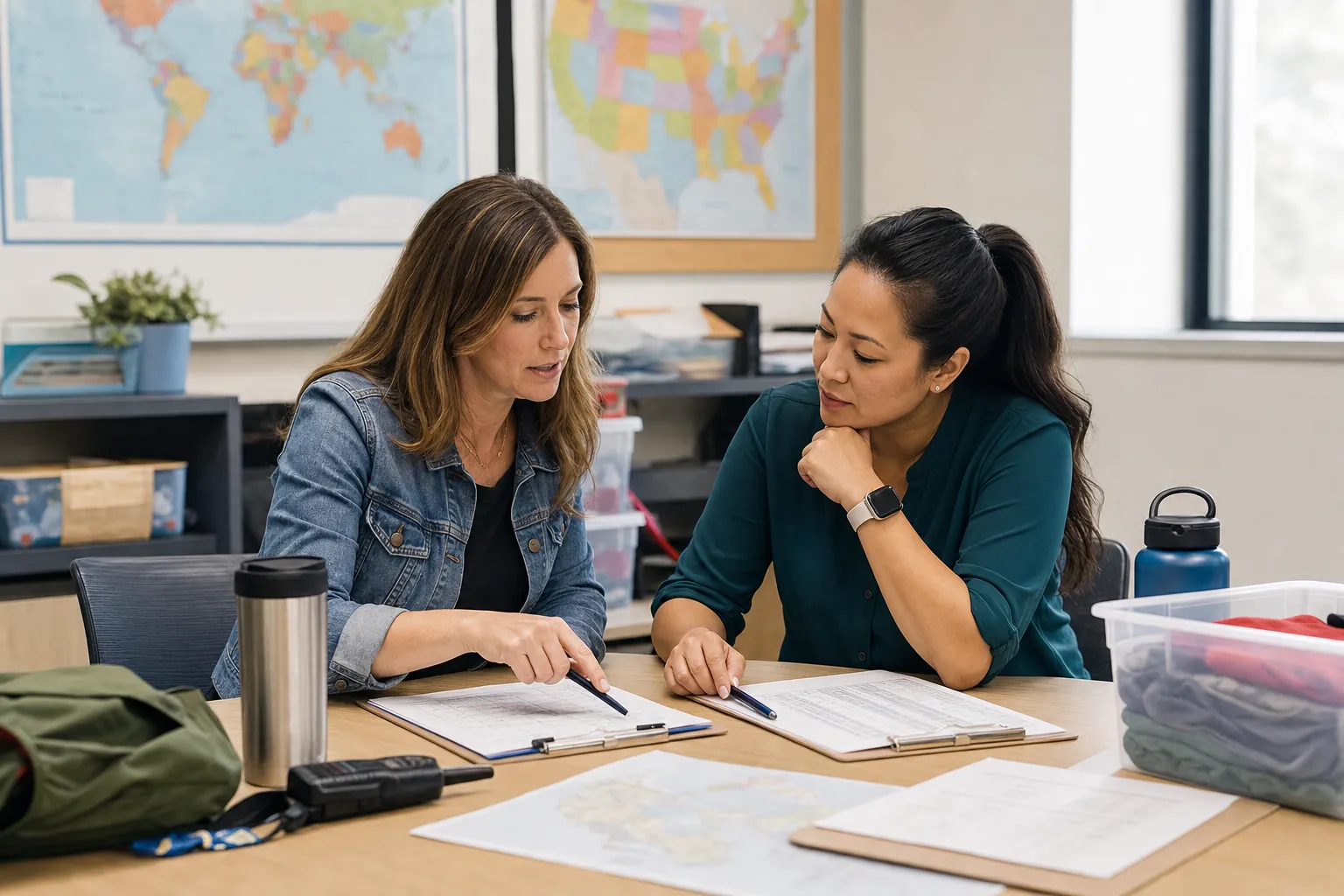
Not every operational detail belongs on the permission slip. Families need the information that helps them prepare their student and make an informed decision. Staff and chaperones need a different level of detail, including destination access instructions, student counts, supervision assignments, emergency procedures, and the transportation contacts who are coordinating the day.
Keeping those two communications separate makes both stronger. A family should not have to sort through staging instructions to learn whether lunch is included. A teacher should not have to search through a stack of signed forms to find the return pickup location. Build a parent-facing summary for clarity, then maintain a staff trip brief for the people responsible for the schedule.
The companion field trip transportation checklist walks through the operational side, including trip briefs, passenger counts, destination access, and day-of communication. Together, the permission slip and trip brief cover the two audiences a school needs to prepare.
Handle health, accessibility, and student needs through the right channel
A permission slip should point families toward the school's approved way to share information that could affect the outing. Depending on school policy, that may include medication plans, mobility needs, dietary concerns, medical alerts, or other support a student needs during travel or at the destination. Do not assume a general field trip form replaces the school's established health or student-services process.
Give families a clear, private path for questions. A note such as "Contact the school office or nurse by the return deadline if your student needs support during the trip" is more useful than asking families to write sensitive details in an open-ended box that may not reach the right person. The staff planning the trip can then coordinate with the appropriate school team and transportation partner before departure.
When accessibility or equipment affects the travel plan, raise it early. Phoenix Suburban's local, accountable approach is built around clear coordination, so schools can bring the relevant transportation details forward before the day becomes urgent.

Write the form in language families can act on
A field trip permission slip works best when it sounds like a helpful school message, not a packet of internal instructions. Write dates in a familiar format, spell out unfamiliar destination names, and explain any school-specific term the first time it appears. A parent should not need to know the difference between a staging area and a loading zone to understand when their student needs to arrive.
Keep action items direct. Instead of saying that lunches are "at the discretion of the program," say whether students should bring a lunch, whether a meal is included, or whether the school will send another update. Instead of saying a student must be "appropriately prepared," list the clothing, shoes, water, sunscreen, materials, or money that are actually relevant to the destination. Specific language gives families a better chance of preparing correctly the first time.
It also helps to separate the information a family needs to read from the information they need to return. Put the authorization line, required signatures, payment or contribution instructions when applicable, and deadline in a clearly visible part of the form. If there is an online option, explain the one official route rather than asking families to guess whether they should return paper, email a teacher, or use another system.
Before sending the form, ask someone who was not involved in planning the trip to read it quickly. If they cannot explain the date, destination, departure window, return plan, and next action without asking a question, the wording needs another pass. That small review can prevent a busy school office from fielding the same question dozens of times.
Prevent the details that create avoidable follow-up
Families are usually not looking for a long operational narrative. They are looking for the missing detail that affects their child. A few items are easy to overlook because staff members already know them: whether students return to campus or are released elsewhere, whether they need a backpack or a packed lunch, whether there is a dress requirement, and what happens if rain or extreme heat changes the plan.
Address the questions that are predictable for your particular trip. A museum program may require students to arrive before the first class period. An outdoor outing may need closed-toe shoes, a refillable water bottle, or weather-ready clothing. An athletic or performance trip may involve equipment, uniforms, or a late return. Naming the practical expectation is more helpful than adding general reassurance.
Be especially careful with pickup and return language. State the school's normal plan in a way that families can follow, then avoid creating a separate release routine on the form unless it has been reviewed through the right school process. If a delay is possible, explain the channel the school will use for updates rather than asking families to monitor several platforms or call individual staff members.
Finally, make sure the information on the permission slip matches what teachers, office staff, and chaperones are telling families. One clear version of the plan builds trust. Conflicting reminders, even when they are minor, create uncertainty at the exact moment the school needs families to respond on time.
Use a simple return process that staff can manage
A polished form is only useful when the school can tell which students are cleared to participate. Decide who receives forms, where they are recorded, who follows up on missing paperwork, and when the final student list is ready for the trip team. Keep the process familiar for families and manageable for staff.
Set one clear due date and send a short reminder before it passes. Families are balancing busy schedules, so a reminder should repeat the trip name, deadline, and the one action required. Avoid sending several different versions of the same form or changing the instructions after the first message unless something important truly changes.
Once the form deadline passes, the school should follow its stated process for late returns. Consistency matters. It helps staff plan supervision and transportation accurately, and it keeps families from receiving conflicting answers from different people.
Confirm the day before the group leaves
The completed forms are one part of the final check. Before the trip, confirm the student count, adult supervision plan, contact list, destination entry instructions, transportation schedule, and the family update channel. Recheck anything that changed after the original notice went home.
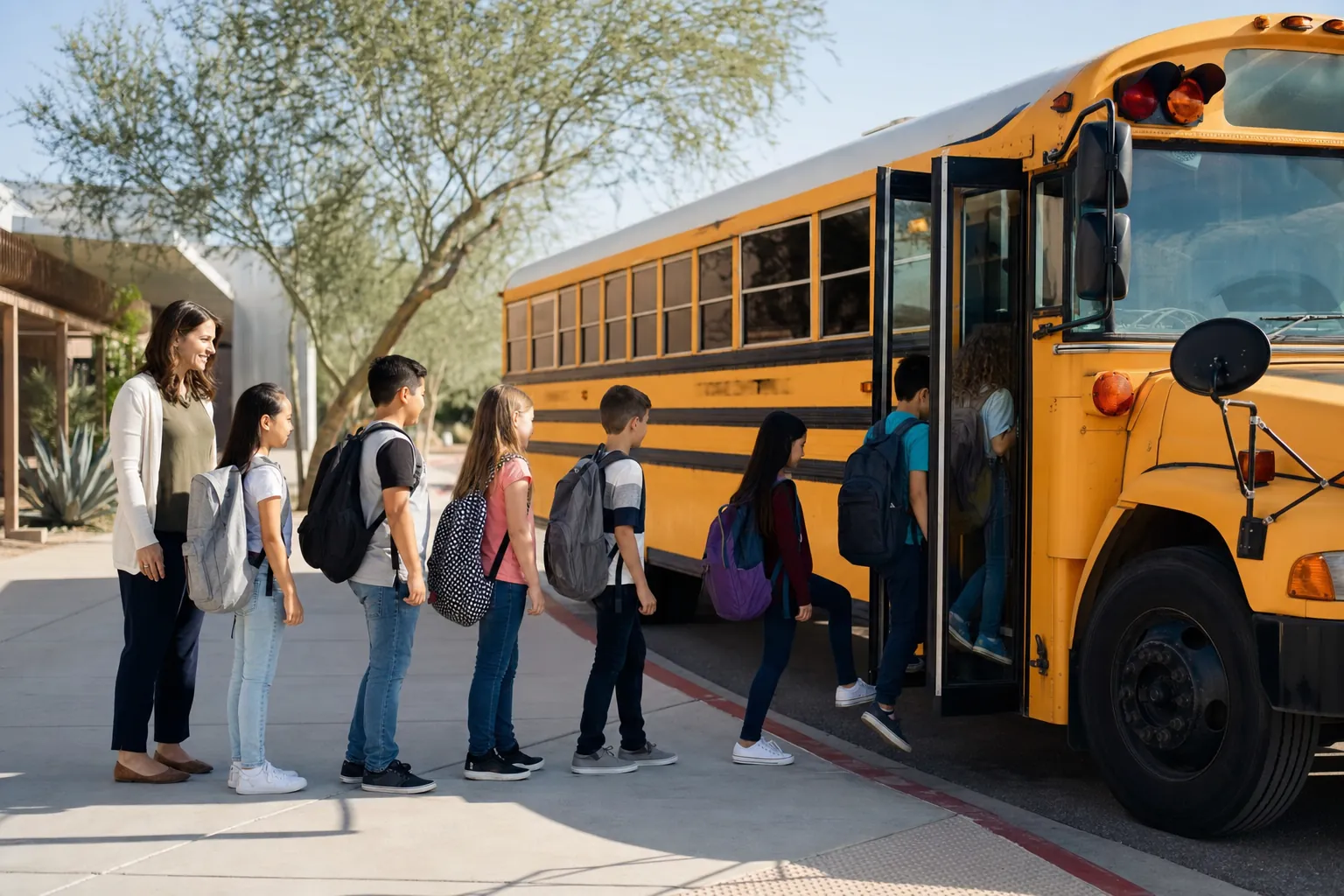
Students also benefit from a short, age-appropriate boarding and riding reminder. NHTSA's guidance for activity and field trips calls for students to be instructed on safe riding practices and emergency exits before departure. Keep the message brief: where to wait, when to board, staying seated, keeping aisles clear, and listening to school staff and the driver.
With the family communication, staff brief, and transportation plan all aligned, the group can start the day with fewer surprises. Schools that need help getting the travel side into focus can request transportation information with the trip date, pickup location, destination, expected passenger count, and travel times.
Use the permission slip as part of a complete trip plan
A thoughtful permission slip does not replace school policy, a staff trip brief, or a transportation plan. It connects them. It gives families a clear view of what is happening, gives staff a dependable process for confirming participation, and gives the people coordinating travel the information they need to plan responsibly.
When those pieces are handled in the right order, the field trip becomes easier to manage from the first form sent home through the return to campus. That leaves more room for the learning experience the trip was meant to support.
Planning a school outing
Bring the travel details into focus before the form goes home.
Phoenix Suburban Transportation helps Phoenix-area schools coordinate field trips, educational outings, athletics, and customized transportation needs.
Frequently asked questions
A school-approved form should clearly identify the trip, explain where and when students are traveling, name what families need to provide, and include the required parent or guardian authorization. The exact form should follow the school's own policies and approval process.
Send the form as soon as the trip details and school approval are settled. Families need enough time to read the information, ask questions through the school's usual channel, make any needed arrangements, and return the form by the deadline.
Yes. Families should understand the departure location, planned departure and return window, destination, and the transportation plan at the level your school normally shares. Clear basics reduce avoidable questions and help families prepare students for the day.
It is better to use the school's own approved form or have the right school administrator review any proposed format. Policies, required acknowledgments, emergency procedures, and signature requirements can vary from one school system to another.
The school should follow its stated process. A clear deadline and one designated contact help staff know whether a late form can still be reviewed, whether a student can participate, and what needs to be communicated to the family.
Related posts
Field Trip Transportation: A School Planning Checklist
A practical checklist for schools coordinating safe, organized transportation for an educational outing.
Read the checklist →