
Field trip planning
8th Grade Field Trip Ideas That Build Independence.
8th grade field trip ideas that connect civic life, careers, science, history, and the outdoors to a purposeful school-day experience.

Eighth grade is a good time for a field trip that asks students to do more than take in a new place. They are ready to compare evidence, ask a thoughtful question, trace how a system works, and notice the choices people make in the world beyond school.
The most useful 8th grade field trip ideas connect to that growing independence. Start with a question students are already working on, then choose a setting where they can investigate it in person. The destination can be local and still feel significant when the group has a clear purpose, a manageable schedule, and enough time to arrive, learn, regroup, and return without turning the day into a race.
Choose an 8th grade trip with these questions
- What real question can students investigate? Give the group one idea to test, compare, or explain.
- What will students do? Look for an observation, discussion, interview, mapping task, or evidence-gathering activity.
- What does the destination require? Confirm capacity, timed entry, security, accessibility, lunch, and adult expectations before the date is set.
- How will the class use the experience afterward? Plan a short reflection, claim, presentation, or project while the visit is still fresh.
1. See civic decisions in action
A city council meeting, courthouse education program, public library system, planning department, election office, or public works facility can turn a civics lesson into something students can see. Eighth graders can look for the question a public body is trying to solve, the information people bring to the decision, and the tradeoffs that shape the outcome. Those are useful habits whether the class is studying government, local history, geography, or argument writing.
Prepare the group for the setting. A working public agency may have security procedures, limits on movement, and rules for respectful observation. Give students a small note-taking task, such as identifying a claim and the evidence used to support it. A ten-minute debrief afterward can help separate what they saw from what they assumed before the visit.
2. Make science and engineering visible
A science center, university lab, water facility, maker program, public utility, or engineering workplace gives students a chance to see how questions become tests, data, designs, and decisions. Instead of asking them to cover every exhibit, choose one investigation. Students might trace how a water system moves through a community, identify the constraints behind an engineering design, or compare two ways a problem is measured.
For Phoenix-area schools, the Arizona Science Center’s current school-group packet is a useful reminder that the practical details protect the learning time. Reservations, group counts, arrival timing, lunch, and bus instructions all need to be settled before the students are at the curb. Those details are not glamorous, but they are what keep a good program from becoming a hurried one.
3. Treat a museum or historic site like a source lab
Museums, archives, cultural sites, memorials, and historic neighborhoods can give eighth graders real objects, images, maps, and stories to interpret. A focused visit works better than a broad sweep. Before leaving school, introduce one question: What does this source reveal? What does it leave out? How does it compare with the account in a textbook? During the visit, ask students to collect one detail that supports, complicates, or changes their first answer.
Many educational programs are built around exactly that kind of active learning. The National Park Service’s field-trip program at Valley Forge, for example, uses discussion and debate alongside place-based history for students in grades 6 through 12. A local site does not have to offer the same format to be valuable. It simply needs to give students evidence they can work with when they return to class.
4. Connect coursework to careers and technical programs
An eighth grade visit can make the path to high school feel more concrete without asking students to choose a career too soon. A community college, career and technical education program, trade school, hospital education program, media studio, manufacturing facility, culinary program, or design workshop can show how people use math, reading, science, communication, and persistence in real work.
Ask the host to show one process from beginning to end. Students may follow how a tool is used safely, how a team checks quality, how a design moves from idea to prototype, or how a professional solves a common problem. A short conversation about training, teamwork, and problem-solving often gives students more than a polished tour. Have them arrive with one question about a skill they want to build before high school.

5. Investigate a local environmental question
A botanical garden, desert preserve, riparian area, zoo, watershed program, recycling center, or outdoor education site can support questions about ecosystems, water, climate, adaptation, conservation, and human impact. Eighth graders can handle a more deliberate field task than younger groups. They may compare two microhabitats, record evidence of adaptation, map a route, collect observations for a claim, or ask a guide how a local management decision is made.
In Phoenix, outdoor planning needs to be as realistic as the learning question. Confirm shade, water access, walking distance, restrooms, accessibility, weather procedures, and an adult meeting point. A shorter route with time to observe can be stronger than an ambitious outing that leaves students overheated, scattered, or rushing back to the bus.
6. Explore how a community solves everyday problems
Students often see services without seeing the systems behind them. A transportation facility, food bank, animal shelter, public health program, community garden, airport education program, library branch, or nonprofit can show how people organize information, resources, equipment, and time to meet a real need. Ask students to watch for the problem being solved, the people involved, and the limits the organization has to work within.
This kind of trip works well with a before-and-after structure. Before the visit, let students write down what they think the organization does. After the visit, have them revise that explanation with two pieces of evidence. The activity gives the group a reason to listen closely without burying the day under a worksheet.
7. Use the outing to practice the move into high school
For many students, eighth grade carries a natural transition point. A thoughtful outing can give them practice with the habits that will matter in a larger, more independent setting: arriving prepared, managing a schedule, asking for clarification, staying with a group, listening for the details that matter, and turning observations into an explanation. The goal is not to treat the trip as a rehearsal for adulthood. It is to give students a safe, supported setting in which their growing responsibility has a real purpose.
A campus, career program, public meeting, museum, or service organization can all support that kind of learning. Assign a small team role, such as timekeeper, map reader, question collector, or evidence recorder, and make the expectations clear before departure. Students then have a reason to pay attention to the logistics as well as the destination. A brief reflection on what helped the group stay organized can be just as useful as a reflection on the exhibit or presentation itself.
8. Choose an option the school can run well
The best idea on paper is not always the best trip for the calendar. Compare each option against the practical realities early: Can the destination handle the group size? Is there a reservation or security process? Does the arrival window fit the school day? Are there places for lunch, water, restrooms, and regrouping? Does the setting work for students who need mobility, sensory, medical, or language support? A school does not need to solve every variable at once, but it does need enough answers to avoid finding out the hard way on departure morning.
It is also worth protecting the pace of the day. Build in time for loading, traffic, entry, student counts, restroom stops, lunch, transitions, and the return to campus. If the schedule only works when every minute goes perfectly, it is too tight. A destination with one meaningful program and an unhurried return usually gives students more to remember than a packed list of stops that leaves everyone watching the clock.
Give students a meaningful job during the visit
Eighth graders do not need a long packet to stay engaged. One focused role is enough: document a design choice, compare two sources, identify a question the group still cannot answer, interview a guide, or collect evidence for a short claim. Explain the task before the group arrives, then leave enough open time for students to be curious and present in the place.
Adults need an equally clear plan. Confirm assigned student groups, headcount routines, meeting locations, transition expectations, contact methods, and the response if someone becomes separated. The field trip chaperone checklist can help turn those expectations into a briefing that is easy to use on the day.
Plan the journey around the learning day
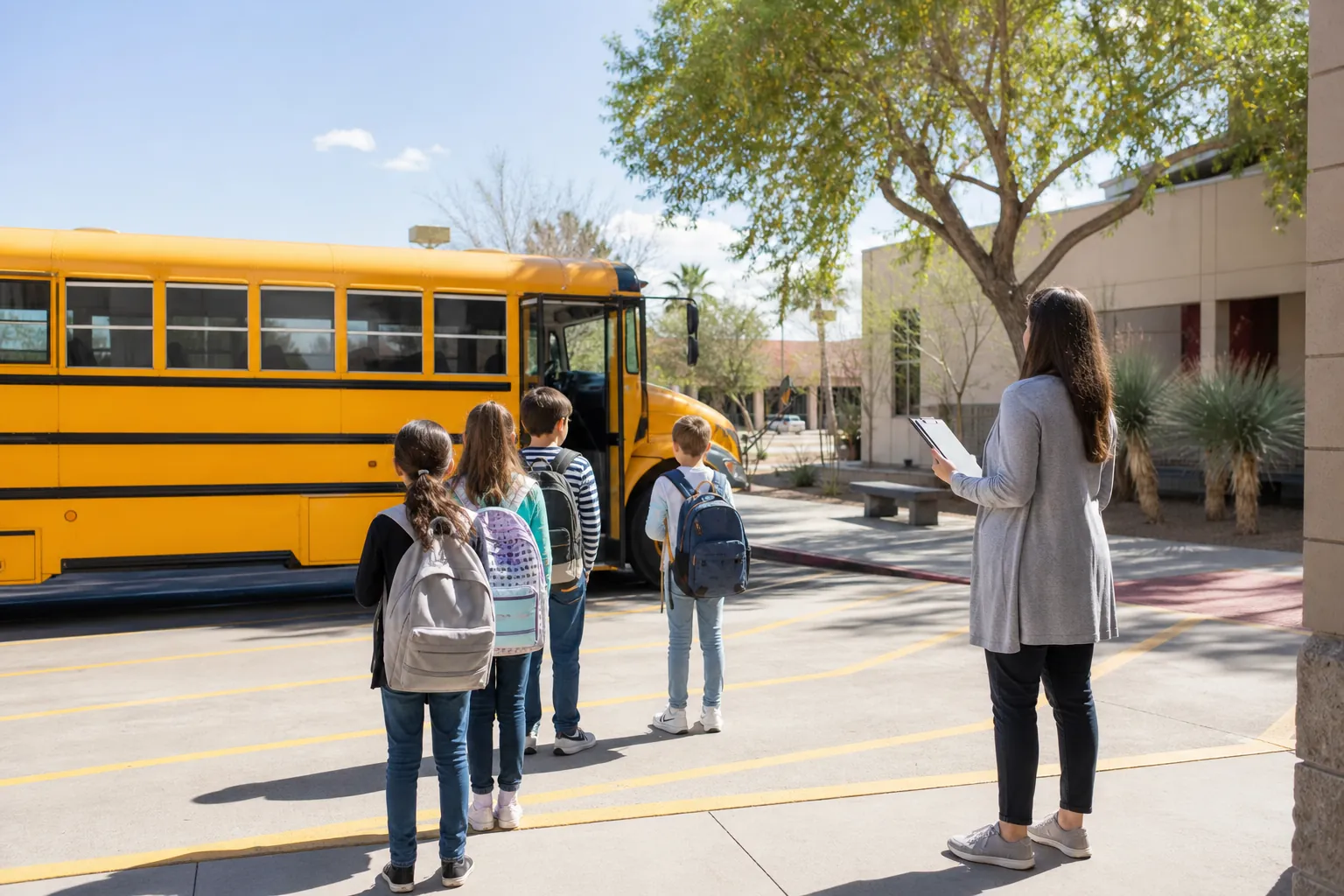
Transportation is part of the field trip, not an afterthought after the destination is chosen. Confirm the passenger estimate, pickup location, destination entrance, required arrival time, bus loading instructions, trip lead, and return plan before the group is in motion. The field trip itinerary template puts those details in one place, while the planning checklist helps school teams cover approval, family information, adult roles, food, and access needs.
Before departure, review the school’s established expectations for boarding, behavior, adult supervision, and student counts. The National Highway Traffic Safety Administration’s school bus safety guidance is a useful companion to those procedures. A calm, organized first ten minutes gives the rest of the day room to work.
How Phoenix Suburban Transportation helps
When an eighth grade team has chosen a destination and defined the learning purpose, Phoenix Suburban Transportation can help organize the travel details around the real day. Sharing the date, passenger count, pickup point, destination access, arrival target, and return window early gives the transportation conversation the context it needs.
For Phoenix-area educational outings, start with the field trip transportation checklist, then request information when the trip details are ready. The goal is straightforward: make sure the travel plan supports the learning experience the school has worked to create.
Planning an eighth grade outing
Start with the learning goal, then build the day around it.
Phoenix Suburban Transportation helps schools coordinate student counts, pickup timing, destination access, and the return plan for educational outings.
Frequently asked questions
A good 8th grade field trip asks students to investigate a real place, question, process, or career connection. It should give them an active role, such as comparing evidence, interviewing a guide, recording observations, or explaining a decision, while still fitting the school’s time, supervision, and travel plan.
Eighth grade groups can learn at science centers, museums, historic sites, courts, public agencies, environmental programs, colleges, career and technical programs, and community organizations. The strongest option is one that matches a current class question and offers a clear activity for students, not just a long tour.
Begin when the school has a likely learning purpose and date. Educational destinations can have limited capacity, set group arrival times, or specific adult requirements. Planning early gives the school time to confirm approval steps, adult coverage, accessibility, lunch, transportation, and family communication without rushing the final details.
Confirm the date, group count, pickup location, destination address, requested arrival and return times, loading instructions, trip lead, accessibility needs, and day-of contact. Clear details give the transportation conversation a practical foundation and help the school protect instructional time.
Related posts
Middle School Field Trip Ideas: 7 Engaging Options for Schools
Explore seven engaging middle school field trip ideas, then choose an option that fits your students, learning goal, and school-day plan.
Read the guide →
Field Trip Planning Checklist for Schools
Use this school field trip planning checklist to confirm approvals, destination details, adult roles, transportation, and family communication before the day of the trip.
Read the guide →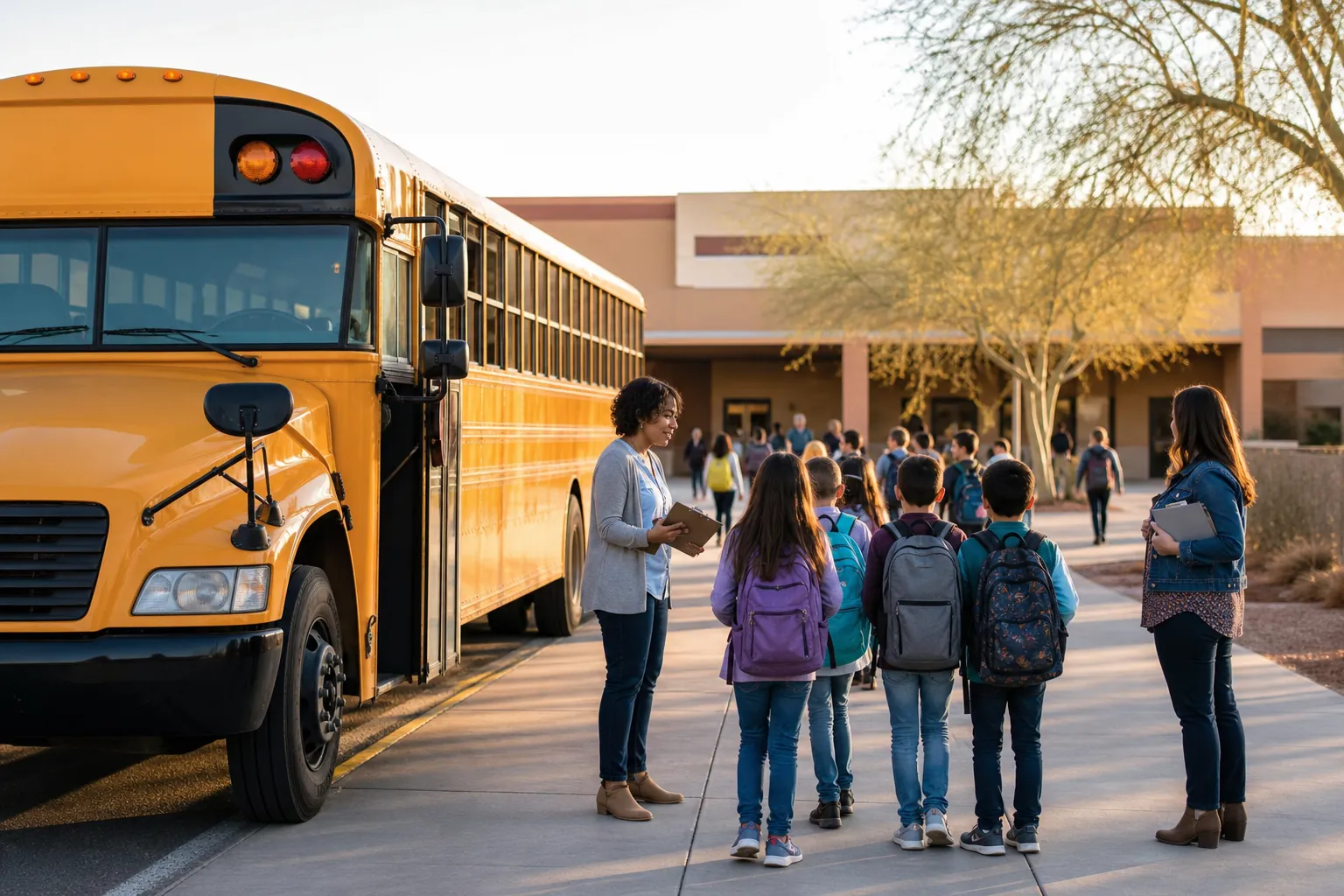
Field Trip Transportation: A School Planning Checklist
A practical checklist for schools coordinating safe, organized transportation for an educational outing.
Read the guide →