
Field trip planning
Field Trip Lunch Ideas: A Guide for Schools.
Practical field trip lunch ideas that help schools and families plan for travel, timing, food safety, and a smoother day away from campus.

A field trip lunch does not need to be elaborate. It needs to help a student stay comfortable and ready for the next part of the day. The best choices are familiar, easy to manage, and built around the school's plan for timing, food safety, allergies, and the destination. A little preparation also keeps the lunch stop from becoming another moving part for staff to solve.
Start with the school's plan, not a food idea
Before families decide what to pack, the school should be clear about the day. A museum visit with an indoor lunch room is different from an outdoor program, a long bus ride, or a site with only shaded picnic tables. The more specific the school can be about the schedule, the easier it is for families to choose a lunch that will work.
Share the expected lunch window, whether the group will have a place to wash hands, whether water refills are available, and whether lunch will stay with students or be collected by adults. Note any rules from the destination, such as limits on glass containers, outside food, or litter. Schools should also repeat their own guidance on food allergies, food sharing, and medication. The goal is to give families the details that affect their decision without turning the trip notice into an operations manual.
A clear family message belongs with the rest of the trip information. The field trip permission slip guide explains how to separate the details families need from the internal information adults use to coordinate the day. Lunch instructions work best as a short, visible section in that same communication.
Choose a lunch that fits the day away from campus
Field trip lunch ideas should start with food a student already knows and can eat without much help. An unfamiliar meal can be disappointing when a student is hungry, tired, or distracted by the trip. A familiar sandwich or wrap, fruit, vegetables, a simple snack, and water can be enough for many school days away from campus.
Think about the setting before adding too many items. A lunch that requires cutting, spreading, heating, or careful assembly can be difficult on a bus, at a picnic table, or in a crowded venue. Choose containers that open easily and portions that a student can finish within the available time. Keep messy foods, strong odors, and items that need a lot of adult attention to a minimum.
It also helps to plan for the rhythm of the day. A group may eat later than its usual lunch period because of travel, an activity, or venue availability. A small additional snack can be useful when the school has planned a long afternoon, but families should follow the school's instructions about when food may be eaten. Students should not be asked to manage a large supply of snacks while moving between exhibits, vehicles, and meeting points.
For a warm Phoenix-area outing, water deserves the same thought as food. A labeled refillable bottle is often simpler than several loose drinks, provided the school confirms that students will have a way to refill it and can keep it closed during travel. Teachers and chaperones can reinforce the school's expectations about when students may drink and where bottles should be stored.
Keep the meal simple for students to open and eat
A student should be able to recognize what is in the bag, open the main containers, and pack everything back up after eating. That sounds basic, but field trip lunch periods can be noisier and less predictable than lunch at school. Students may be seated outside, sharing a table with a different group, or eating before they move quickly to the next activity.
Make the main item the easiest part of the meal to manage. Wraps cut into sections, sandwiches that hold together, or school-approved alternatives can work well when packed in a secure container. Choose fruit and vegetables that are washed and ready to eat when appropriate. Include napkins and any utensil the student will actually need, then avoid adding extras that can get lost in a busy backpack.
Families should also consider the student's age and independence. A younger student may need fewer containers and a familiar package style. Older students may carry more of their own belongings, but they still benefit from a lunch that does not spill easily or require a long search through a backpack. When in doubt, simpler is usually better.
Use a lunch bag that can make the full trip
A field trip lunch may travel from home to school, onto a bus, through a destination, and back to campus before the day is over. The bag should be sturdy enough to handle that routine. A compact insulated lunch bag or backpack compartment is usually easier for a student to carry than a large tote full of loose containers.
Pack the lunch in the order it will be used. Put the main meal where the student can find it first, keep a napkin and utensil in a simple pocket or small container, and avoid stacking delicate items beneath a heavy bottle. Make sure lids are secure before the bag goes into a backpack. A lunch that arrives crushed or leaking can create a bigger distraction than the food itself.
Adults should also be able to spot the bag during a group transition. A clearly labeled lunch bag helps when students set belongings under a picnic table, place them in a bus seat, or gather them quickly before returning to the vehicle. The label should identify the student without displaying private health information. For schools, one reminder to keep lunch bags together at the assigned meeting point can prevent a lot of end-of-lunch searching.

Plan cold foods around travel time and weather
Food that needs refrigeration needs extra attention on a field trip, especially when travel, outdoor time, and warm weather are part of the plan. Families should follow the school's direction for insulated bags and cold packs, pack cold items close to departure, and avoid leaving lunch in direct sun. Schools can make this easier by telling families when lunch will be eaten and whether a class will have access to a cooler or indoor storage.
The practical rule is simple: match the food to the day's temperature, travel time, and storage conditions. Families do not need to overcomplicate the lunch. They need enough information to pack items that will hold up until the planned lunch stop and feel familiar when students are ready to eat.
For school staff, the important job is consistency. Do not make families guess whether a lunch will be in a climate-controlled building, a bus, or an outdoor staging area. If the schedule changes, use the designated school communication path instead of asking chaperones to create a new lunch plan on the spot. The same clear contact structure helps with every part of a trip, as outlined in the field trip chaperone checklist.
Protect allergy-aware routines and school rules
Field trips are not the time to relax the school's allergy or food-sharing expectations. Students can be seated in different groups, adults may be focused on attendance and timing, and the usual lunchroom routine may not apply. Families should follow the school's instructions about restricted foods, packaging, and what students are allowed to share. School staff should make those expectations visible before the trip, not only when the group is ready to leave.
Keep food communication specific and calm. Families need to know what is allowed, what should stay at home, and who to contact with a question. Chaperones need to know the supervision process the school has assigned, but they should not be expected to collect private medical details or make decisions outside their role. When the school has a clear plan, students can focus on the experience instead of navigating conflicting instructions.
Labeling can help keep belongings organized, too. A student's name on a lunch bag and water bottle makes it easier to return an item that gets separated from the group. Labels should be practical, not a substitute for the school's approved approach to sensitive information.
Set students up for a calmer lunch stop
A good lunch plan continues after the food is packed. Before the trip, tell students when they will eat, where they should keep their lunch, and what they should do with trash and reusable containers. Remind them that lunch is part of the group schedule. Students should wait for the lead adult's direction before opening food, remain with their assigned group, and leave the area as they found it.
At the destination, adults can make the lunch stop easier by using the same routine they use for other transitions: gather the group, identify the boundary, give students a clear amount of time, and count before moving on. A predictable sequence reduces the chance of a lost lunch bag, a student wandering to another table, or a late departure. The broader field trip transportation checklist offers the same practical approach for boarding, arrival, and the return to campus.

Give families a short checklist they can use
Families do not need a long menu of rules. They need a quick reminder that helps them pack confidently. A useful field trip lunch checklist can include:
- Pack a familiar, school-approved lunch that is easy for the student to open and eat.
- Use the insulated bag and cold sources the school recommends for foods that need to stay cold.
- Send a labeled water bottle if the school has asked for one.
- Follow the school's allergy, food-sharing, and destination rules.
- Include only the utensils, napkins, and snacks the student will need for the planned day.
- Label the lunch bag and water bottle with the student's name.
That checklist supports the real purpose of the day: students should be comfortable enough to participate, adults should be able to manage the group, and the schedule should keep moving without avoidable interruptions at a busy lunch stop.
Coordinate the whole day, not only the lunch stop
Lunch is one of many details that needs to fit the field trip plan. The school still has to account for the destination, passenger count, pickup conditions, arrival window, supervision, equipment, and return time. When those details are planned together, families receive clearer instructions and the adults responsible for the day have fewer last-minute questions to solve.
Phoenix Suburban Transportation helps Phoenix-area schools coordinate the transportation side of field trips and educational outings. A conversation before the trip can cover pickup timing, group size, destination access, vehicle needs, and the return plan, so the day has a stronger foundation before students pack a lunch bag.
Planning a school outing
Bring the trip details into one clear plan.
Phoenix Suburban Transportation helps schools coordinate field trips, educational outings, athletics, and custom transportation needs.
Frequently asked questions
A good field trip lunch is easy for the student to open and eat, fits the school’s food and allergy rules, and can stay at a safe temperature until lunch. A simple main item, fruit or vegetables, a drink, and one familiar snack is often easier to manage than a large meal with many loose pieces.
Use an insulated lunch bag and cold sources for items that need to stay cold, following the school’s directions. Families should pack cold items as close to departure as possible and keep the lunch out of direct sun once the group arrives.
Plan for the student’s normal appetite, the activity level, the length of the day, and whether the school has scheduled additional snack time. Schools can make this easier by telling families when lunch will happen and whether students will have a place to refill water.
Share the lunch time, expected weather, destination rules, food-allergy guidance, whether food can be stored or chilled, and any limits on glass containers, cash, or outside food. A short checklist is clearer than a long message with mixed trip details.
Students should follow the school’s direction, but a labeled refillable water bottle is often useful for a full day away from campus. Schools should tell families whether refill stations will be available and remind students to keep bottles closed while traveling.
Related posts
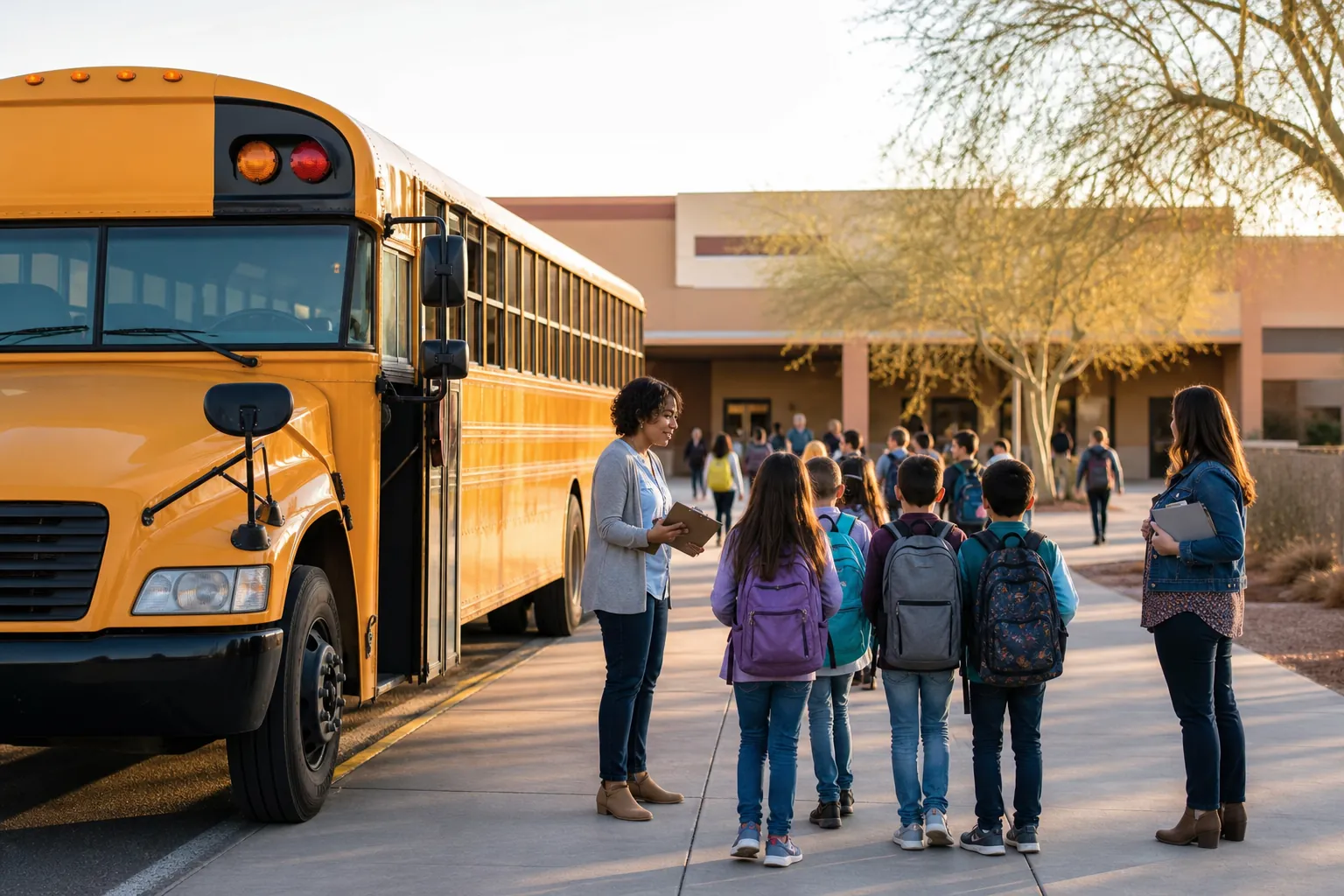
Field Trip Transportation: A School Planning Checklist
A practical checklist for schools coordinating safe, organized transportation for an educational outing.
Read the checklist →
Field Trip Permission Slip: What to Include
A practical guide to the details families need before a school field trip, from itinerary basics to return plans.
Read the guide →
Field Trip Chaperone Checklist: 10 Essentials
A practical checklist for school chaperones who need to keep students accounted for, informed, and together throughout a field trip.
Read the checklist →