
Daily student routes
Discuss routine transportation around arrival and dismissal times, expected riders, pickup areas, school access, community stops, and the contacts responsible for keeping the plan current.
Phoenix and surrounding areas
A practical starting point for schools and programs planning recurring transportation for students.
Clear coordination. Reliable planning. A more useful conversation from the start.
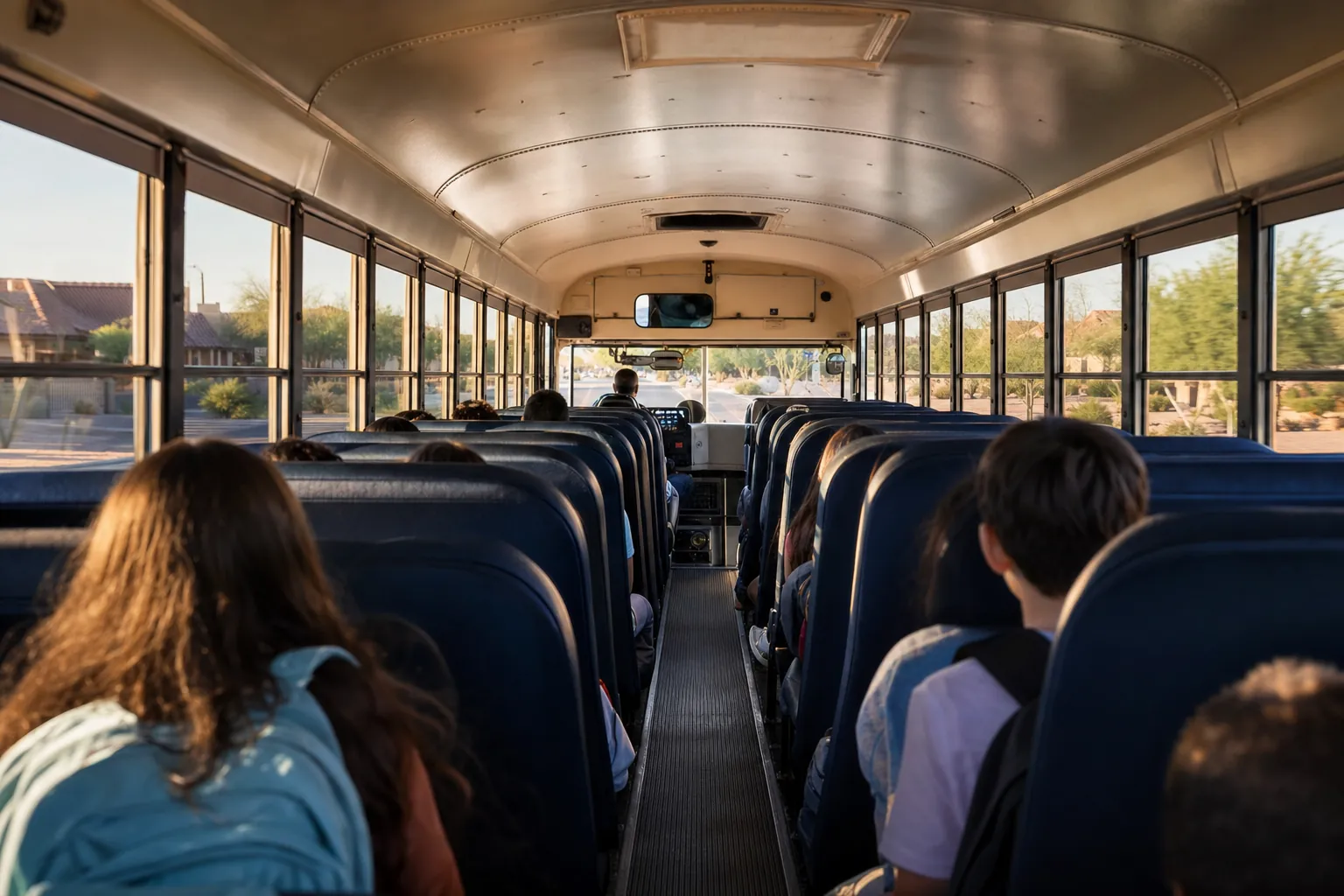
Contracted student transportation
A student transportation contract should begin with the real rhythm of your school, not a generic route on paper.
Phoenix Suburban Transportation helps Phoenix-area schools and programs start a recurring transportation conversation with the details that matter: who is riding, when students need to arrive, where they can safely load, which adults are coordinating the day, and what may change across the calendar.
For one school, the need may be a daily route that gives families another way to reach campus. For another, it may be an ongoing schedule connecting students to an educational program, a community stop, or an extended-day activity. The right starting point is the same. Bring the school-day conditions into view before the schedule becomes urgent.
Arizona-based leadership with more than 20 years of student transportation experience informs that conversation. We listen for the operational details a school team is already managing, then use them to create a clearer foundation for discussing contracted student transportation.
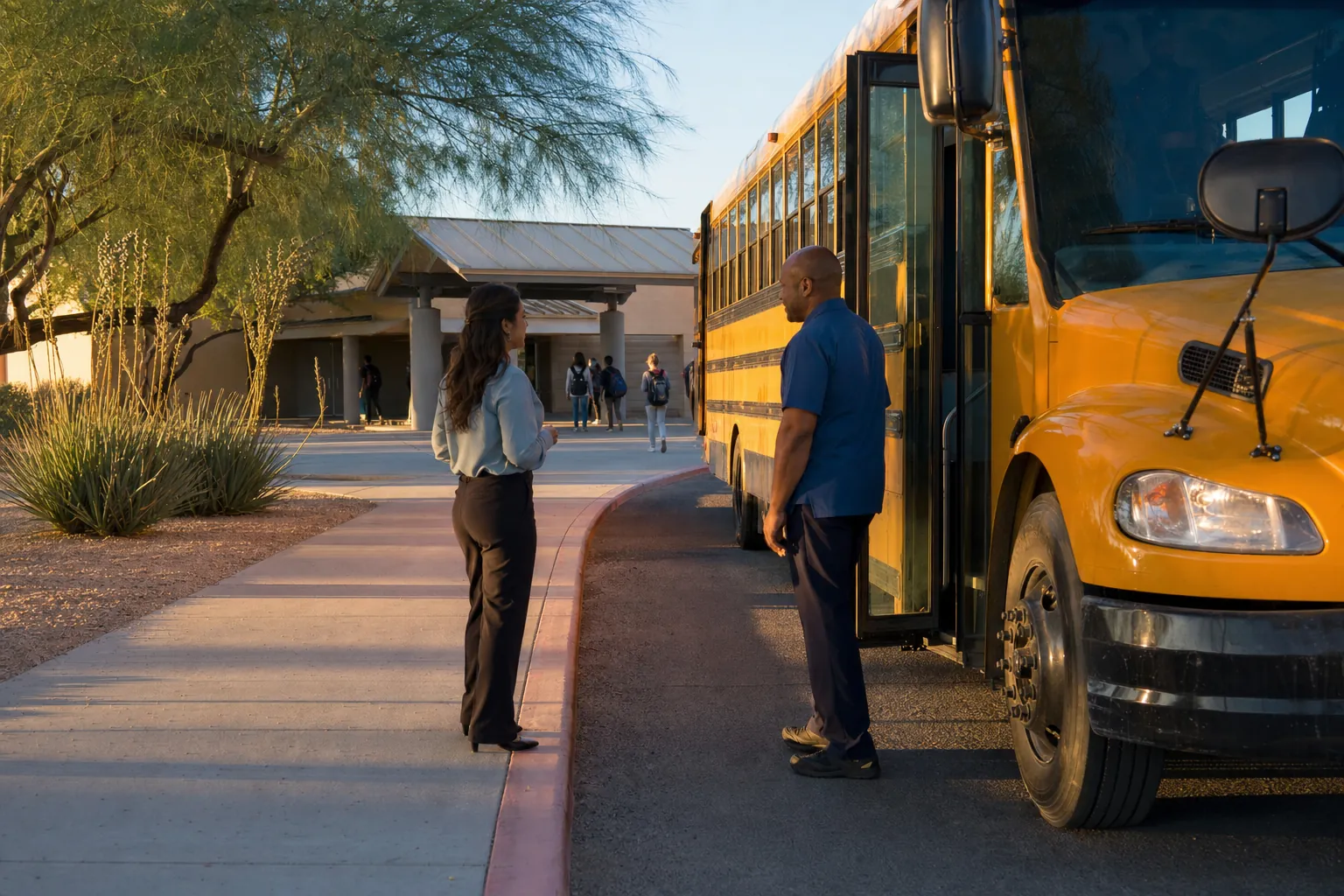
A plan that reflects your campus
Recurring student transportation touches the campus, the families using the service, school staff, and the people supervising students. Arrival windows, dismissal flow, loading areas, rider counts, stop locations, and the school calendar all affect how the day needs to work.
Starting with those conditions helps a school team describe what is known and identify what still needs to be confirmed. It gives everyone a more grounded way to discuss service before a routine is set.
Request a quoteWhere a contract can fit
Every school has its own schedule, student population, and campus conditions. These are some of the recurring needs a school or program may bring into the conversation.
Discuss routine transportation around arrival and dismissal times, expected riders, pickup areas, school access, community stops, and the contacts responsible for keeping the plan current.
Bring the school calendar, campus flow, family communication needs, extended-day programs, and the student experience into a transportation conversation shaped for your school.
Plan recurring travel for programs that connect students to enrichment, learning opportunities, partner locations, tutoring, or community-based support beyond a traditional route.
Include after school transportation, activities, athletics, rehearsals, and other student travel that needs a plan after the regular dismissal bell.
Identify the early releases, testing days, holidays, professional learning days, seasonal programs, and other schedule differences that can shape recurring service.
Give your team room to discuss a changing rider count, additional stops, a new program, or another practical condition that may affect the transportation need over time.
A practical first conversation
A useful transportation request does not need to answer every question. It needs to make the important questions visible.
Start with the school or program, the days transportation is needed, normal arrival and dismissal times, estimated number of students, and the pickup and drop-off locations. If a campus has a particular loading entrance, traffic pattern, or supervision routine, include that as well. Those details help place transportation in the real environment where students will use it.
It is also helpful to name the school contact who can confirm information and share changes. A transportation plan may involve an administrator, office staff, teachers, program leaders, and families. A clear point of contact gives the school a dependable way to handle questions, updated rider counts, and calendar adjustments without leaving every person to track the same detail independently.
Finally, describe the exceptions your team already sees coming. A route may work differently on an early release day. An activity may require a later return. A seasonal program may run only for part of the year. Identifying those patterns early gives the conversation more honesty and makes it easier to plan around the days that do not look like the normal schedule.

What a school team can clarify
A recurring transportation plan is stronger when the school office, program lead, and on-site supervisors share the same core information. Staff do not all need to own the same task, but they do need to know who confirms the day's plan, where students gather, and what to do when something changes.
That shared picture becomes especially important at arrival and dismissal. A busy campus may need students to wait in a particular area, use a specific entrance, or move through a supervised handoff. Bringing those practices into the conversation helps avoid treating transportation as separate from the school's established routines.
Families benefit from that clarity too. When a school can explain the timing, location, and normal process in a consistent way, parents and caregivers have a more reliable picture of how their student will begin or end the day. The work starts with a school-specific plan that people can understand and support.
See our approach to school transportation →What to include
You do not need a finished route plan before reaching out. These details help your school team explain the transportation need in front of it.
Include the days service is needed, normal arrival and dismissal timing, the start date you are considering, and known changes such as early releases or school breaks.
Share the estimated rider count, school or program location, pickup and drop-off areas, known stops, campus access points, and any loading instructions.
Identify the person who can answer questions, confirm practical details, and help carry an update through the school's established communication process.
Let us know about activities, extended-day programs, equipment, multiple groups, accessibility considerations, family communication, or other conditions that affect student travel.
A local partner
Student transportation is part of whether the school day can begin and end as planned. A clear, school-specific discussion helps staff bring the right people, timing, and locations into view from the beginning.
Tell Phoenix Suburban Transportation about the students, schedule, campus, and transportation needs your team is considering. We can help you start the conversation from there.
Request a quote
Frequently asked questions
Contracted student transportation is an ongoing arrangement for a school or program that needs a dependable way to move students. The conversation can cover recurring routes, bell times, pickup and drop-off areas, rider counts, school contacts, calendar changes, and the practical details that shape daily service.
Phoenix-area charter schools, private schools, educational programs, community organizations, and other school teams can begin a conversation about recurring student travel. Share the school or program, the students who need transportation, the schedule, locations, and the person coordinating the request.
A useful starting point includes service days, arrival and dismissal times, estimated rider count, pickup and drop-off locations, campus loading instructions, any known stops, and the school contact who can confirm changes. You do not need a final plan before reaching out.
A school can describe the full set of transportation needs it is considering, including daily routes, later-day programs, field trips, athletics, activities, or seasonal schedule changes. That context helps shape a conversation around the real school calendar.
School calendars change for early releases, testing, professional learning days, holidays, activities, and weather. Identifying a clear school contact and an established way to share updates gives everyone a more organized starting point when the normal schedule shifts.
Start the conversation