
Enrichment and tutoring
Help students get to an academic program, tutoring session, enrichment block, or community learning opportunity with a schedule that reflects when the activity actually begins and ends.
Phoenix and surrounding areas
Practical transportation support for the activities, enrichment, and later-day schedules that matter to your students.
Clear coordination. Reliable planning. A more useful way to start.
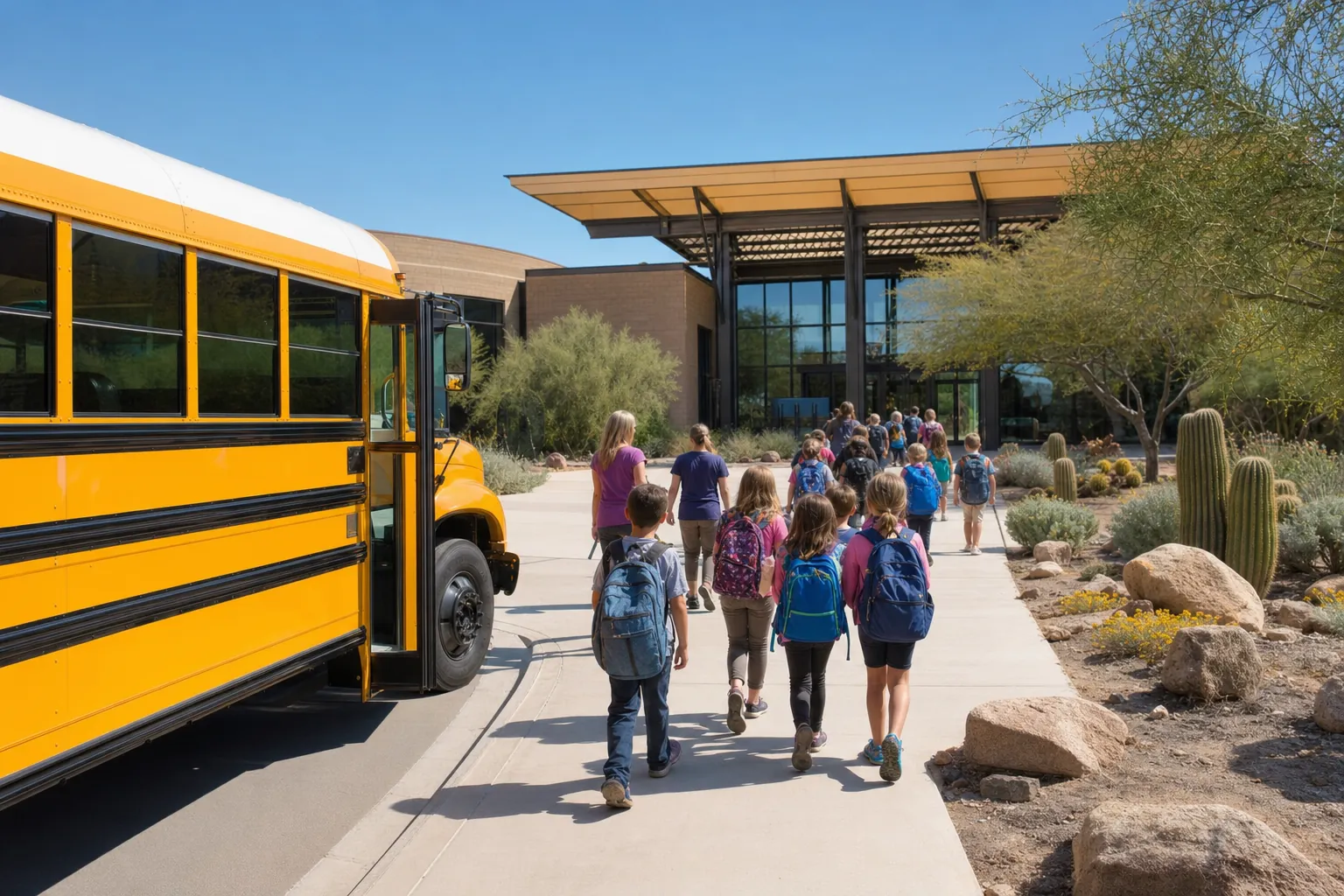
After school transportation
When students stay for a program, practice, rehearsal, tutoring session, or club, transportation becomes part of whether they can take part.
Phoenix Suburban Transportation helps Phoenix-area schools, charter schools, educational programs, and community organizations begin with the details that shape after school travel. That may mean a recurring route from campus to a program site, transportation for a team, a later pickup after enrichment, or a schedule that changes with the school calendar.
These plans work best when they reflect the real handoff from the school day to the next activity. Students may leave different entrances, adults may be supervising more than one group, buses may need a specific loading location, and the return time may depend on an event rather than a bell. Starting with those conditions gives your team a clearer way to discuss what is needed.
We bring Arizona-based leadership with more than 20 years of student transportation experience to the conversation. The goal is not to force a school into a generic schedule. It is to understand the program, the students, the timing, and the people responsible for the day, then build from there.

A plan that fits the program
After school transportation has a different rhythm from a normal morning or dismissal route. A program may start at a different time each day, release students in waves, add equipment, visit another campus, or need a return plan after dark.
That is why the first conversation should cover more than a destination. Share the schedule, group size, staff lead, loading area, drop-off plan, activity calendar, and the conditions that could change the timing. Those details help a school create a more grounded transportation request.
Request a quotePrograms that need a ride plan
One school may need transportation for a single recurring program. Another may need to coordinate several groups across the calendar. Each conversation starts with the people and timing involved.
Help students get to an academic program, tutoring session, enrichment block, or community learning opportunity with a schedule that reflects when the activity actually begins and ends.
Coordinate later pickups and drop-offs for clubs, rehearsals, performances, leadership programs, and other activities that build school connection outside the regular timetable.
Plan around practice times, game locations, team size, equipment, coach contacts, and return timing so the transportation conversation starts with the demands of the event.
Discuss transportation for students traveling from a school to a community organization, campus partner, service project, or program location after classes end.
Build a starting point for weekly or multi-day travel by identifying the student group, days of service, campus access, stops, contacts, and calendar exceptions.
Bring field trips, performances, tournaments, activity weeks, and changing program calendars into the same conversation when they affect how students need to travel.
Clear coordination
A later-day transportation plan needs a shared understanding of who is traveling, who is supervising, and who can confirm a change.
Schools and programs often have several people involved: an administrator or operations lead, activity staff, coaches, teachers, front-office staff, drivers, and families. They do not need to manage every detail in the same way, but they benefit from having clear core information to work from. That can include the pickup window, loading location, group count, destination, school contact, and the school’s process for handling updates.
It is especially useful to identify what changes from week to week. Early releases, testing days, conferences, tournaments, performances, holidays, and weather can all shift a plan that looks simple on paper. Naming those variables early makes the transportation conversation more honest and helps the school prepare for the details that often cause last-minute confusion.
For schools that already coordinate daily student routes, after school transportation can be part of the wider picture rather than a separate unknown. The same campus knowledge, staff contacts, student needs, and communication habits can give the next program or activity a stronger starting point.
A useful first conversation
You do not need every answer before reaching out. The details below help frame a transportation request around the work your staff is already doing.
Include the program type, dates, days of the week, activity start and end times, and the calendar differences your team already expects.
Share the estimated group size, school campus, pickup or loading area, drop-off location, destination details, and any stop sequence that matters.
Identify the adult coordinating the program, the school contact who can confirm information, and how your team prefers routine changes to be handled.
Let us know about equipment, multiple groups, event timing, accessibility considerations, late returns, or other conditions that influence student travel.
A local partner
Transportation should help a school or program make the most of the activities it offers, not create a new obstacle for staff to work around. Start with the schedule and group in front of you, then bring the important details into the conversation.
Phoenix Suburban Transportation can help your team talk through the transportation needs connected to your after school program, activity, or event.
Request a quote
Frequently asked questions
Phoenix Suburban Transportation can discuss transportation connected to enrichment, tutoring, clubs, athletics, performances, campus programs, community activities, and other student travel that happens after the regular school day.
Yes. Begin with the days of the week, approximate student count, release time, pickup location, drop-off plan, program staff contact, and the dates when the regular schedule changes.
Yes. Share the practice or game schedule, destination, team or group size, equipment needs, return timing, and the staff member coordinating the activity so the transportation conversation reflects the day in front of you.
School calendars often change with early releases, testing, conferences, performances, tournaments, and seasonal programs. A clear school contact and an agreed process for confirming changes give everyone a more organized starting point.
Include your school or program, service dates, start and end times, estimated riders, pickup and drop-off locations, campus loading details, destination information, and the person who can confirm the plan.
Start the conversation